


Product Description
by Norman C. Habel (Author)
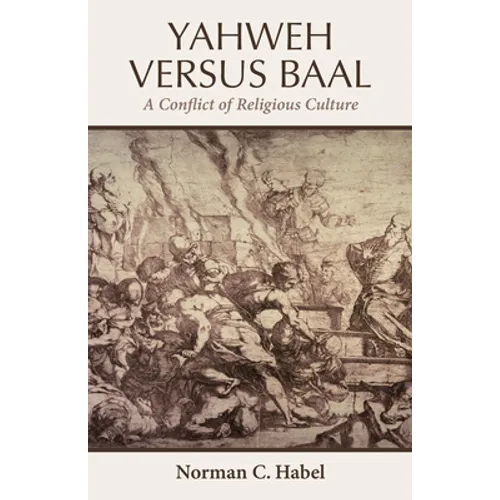
Since 1929, scholars have been concerned with the interpretation of certain Canaanite literary materials found at Ras Shamra in North Syria, known as Ugarit in ancient times. Attention has been paid, primarily, to certain linguistic and cultural parallels between this corpus of literature and sections of the Old Testament. But despite the numerous treatments of the isolated points of contact between Ugaritic and biblical thought, one major question has not received an adequate answer. How and to what extent are the Ugaritic texts, and especially the Baal texts, relevant for an appreciation of the fundamentals of the Israelite religion? Professor Habel seeks to answer at least part of this question by translating pertinent segments of the Baal texts, according to the sequence of G. R. Driver, summarizing their context, and considering their import, thought sequence, and basic ideas in relation to appropriate materials from the early faith of Israel. The succinct results of this comparison are provocative, to say the least. The author begins by isolating the major features of an underlying ""conflict tradition."" The conflict between Israel's beliefs and the religious forces of its environment was a vital influence in the formulation of Israel's earliest religious faith and experience. The content of this faith as summarized in the concise wording of Exodus 19:3-6 is shown to be virtually identical with that of Israel's earliest poetic heritage where a lively polemic against the Canaanite religious is discernible. One of the highlights of Professor Habel's comparison of the Baal texts with Israel's archaic poetic traditions is his contribution to the understanding of Exodus 15. In this connection he discovers a clearly defined sequence of ideas common to certain Baal texts and Exodus 15:1-18. By skillfully utilizing the work of other scholars the author sheds additional light on the polemical and theological import of several passages depicting theophanies of Yahweh. A similar evaluation of the relevance of the Ugaritic texts for the cultic practices of Israel is made possible by a sober evaluation of the pertinent texts. Norman Habel is from Adelaide where he has been involved in social justice and ecojustice issues for many years. In 2012, he published Rainbow of Mysteries: Meeting the Sacred in Nature, a book that resonates with Aboriginal spirituality. His most recent book, published in 2018, is Acknowledgement of the Land and Faith of Aboriginal Custodians After Following the Abraham Trail (Wipf & Stock).
Author Biography
Norman Habel is from Adelaide where he has been involved in social justice and ecojustice issues for many years. In 2012, he published Rainbow of Mysteries: Meeting the Sacred in Nature, a book that resonates with Aboriginal spirituality. His most recent book, published in 2018, is Acknowledgement of the Land and Faith of Aboriginal Custodians After Following the Abraham Trail (Wipf & Stock).