


Product Description
by Derk Pereboom (Author)
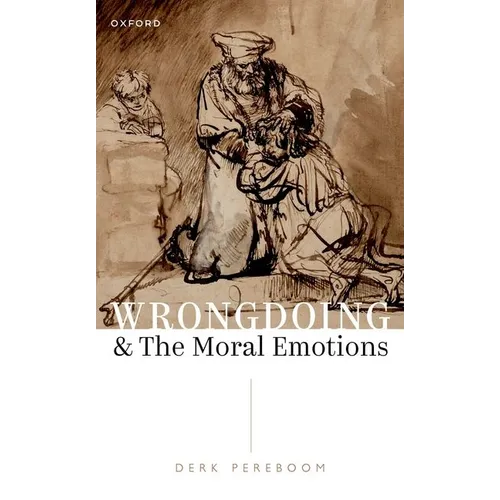
Wrongdoing and the Moral Emotions provides an account of how we might effectively address wrongdoing given challenges to the legitimacy of anger and retribution that arise from ethical considerations and from concerns about free will. The issue is introduced in Chapter 1. Chapter 2 asks how we might conceive of blame without retribution, and proposes an account of blame as moral protest, whose function is to secure forward-looking goals such as the moral reform of the wrongdoer and reconciliation in relationships. Chapter 3 considers whether it's possible to justify effectively dealing those who pose dangerous threats if they do not deserve to be harmed, and contends that wrongfully posing a threat is the core condition for the legitimacy of defensive harming. Chapter 4 provides an account of how to treat criminals without a retributive justification for punishment, and argues for an account in which the right of self-defense provides justification for measures such as preventative detention. Chapter 5 considers how we might forgive if wrongdoers don't basically deserve the pain of being resented, which forgiveness would then renounce, and proposes that forgiveness be conceived instead as renunciation of the stance of moral protest. Chapter 6 considers how personal relationships might function without retributive anger having a role in responding to wrongdoing, and contends that the stance of moral protest, supplemented with non-retributive emotions, is sufficient. Chapter 7 surveys the options for theistic and atheistic attitudes regarding the fate of humanity in a deterministic universe, and defends an impartial hope for humanity.
Author Biography
Derk Pereboom, Susan Linn Sage Professor, Philosophy Department, Cornell University
Derk Pereboom (Ph.D. UCLA) is the Susan Linn Sage Professor in the Philosophy Department at Cornell University and Senior Associate Dean for Arts and Humanities in Cornell's College of Arts and Sciences. His areas of research include free will and moral responsibility, philosophy of mind, and early modern philosophy, especially Kant. He is the author of Living without Free Will (Cambridge 2001), Consciousness and the Prospects of Physicalism (Oxford 2011), and Free Will, Agency, and Meaning in Life (Oxford 2014). He has published articles on free will and moral responsibility, consciousness and physicalism, nonreductive materialism, and on Kant's metaphysics and epistemology.


