


Product Description
by Lindy Brady (Author)
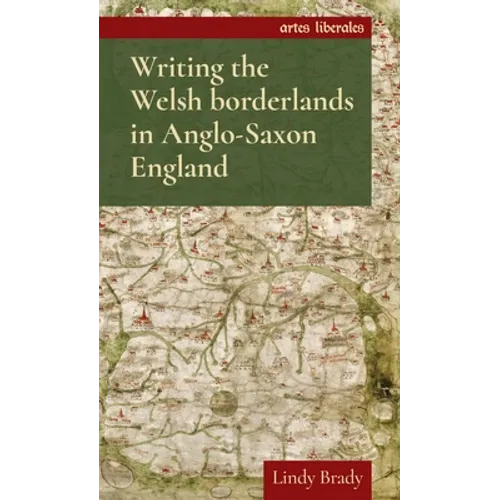
This is the first study of the Anglo-Welsh border region in the period before the Norman arrival in England, from the fifth to the twelfth centuries. Its conclusions significantly alter our current picture of Anglo/Welsh relations before the Norman Conquest by overturning the longstanding critical belief that relations between these two peoples during this period were predominately contentious. Writing the Welsh borderlands in Anglo-Saxon England demonstrates that the region which would later become the March of Wales was not a military frontier in Anglo-Saxon England, but a distinctively mixed Anglo-Welsh cultural zone which was depicted as a singular place in contemporary Welsh and Anglo-Saxon texts. This study reveals that the region of the Welsh borderlands was much more culturally coherent, and the impact of the Norman Conquest on it much greater, than has been previously realised.
Front Jacket
Writing the Welsh borderlands in Anglo-Saxon England is the first study of the Anglo-Welsh border region in the period before the Norman Conquest, from the fifth to the twelfth centuries. It significantly alters our current picture of Anglo-Welsh relations by overturning the longstanding critical belief that interactions between these two peoples were predominately contentious. In fact, as the book shows, the region which would later become the March of Wales was not a military frontier but a distinctly mixed Anglo-Welsh cultural zone. The book studies how the region of the Welsh borderlands before 1066 was depicted in a group of early medieval British texts which have traditionally been interpreted as reflecting a clear and adversarial Anglo-Welsh divide. Chapters focus on some of the most central literary and historical works from Anglo-Saxon England, including Bede's Historia Ecclesiastica Gentis Anglorum, Latin and Old English Lives of St. Guthlac, the Old English Exeter Book Riddles and the Anglo-Saxon Chronicle. A careful analysis reveals that these works depict the Welsh borderlands area differently than the rest of Wales - not as the site of Anglo-Welsh conflict but as a distinct region with a mixed culture. This suggests that the region was much more culturally coherent, and the impact of the Norman Conquest on it much greater, than has been previously realised. Writing the Welsh borderlands in Anglo-Saxon England will be essential reading for both students and scholars of early medieval literature and history.
Back Jacket
Writing the Welsh borderlands in Anglo-Saxon England is the first study of the Anglo-Welsh border region in the period before the Norman Conquest, from the fifth to the twelfth centuries. It significantly alters our current picture of Anglo-Welsh relations by overturning the longstanding critical belief that interactions between these two peoples were predominately contentious. In fact, as the book shows, the region which would later become the March of Wales was not a military frontier but a distinctly mixed Anglo-Welsh cultural zone.
The book studies how the region of the Welsh borderlands before 1066 was depicted in a group of early medieval British texts which have traditionally been interpreted as reflecting a clear and adversarial Anglo-Welsh divide. Chapters focus on some of the most central literary and historical works from Anglo-Saxon England, including Bede's Historia Ecclesiastica Gentis Anglorum, Latin and Old English Lives of St. Guthlac, the Old English Exeter Book Riddles and the Anglo-Saxon Chronicle. A careful analysis reveals that these works depict the Welsh borderlands area differently than the rest of Wales - not as the site of Anglo-Welsh conflict but as a distinct region with a mixed culture. This suggests that the region was much more culturally coherent, and the impact of the Norman Conquest on it much greater, than has been previously realised. Writing the Welsh borderlands in Anglo-Saxon England will be essential reading for both students and scholars of early medieval literature and history.Author Biography
Lindy Brady is Assistant Professor in the Department of English at the University of Mississippi



