Product Description
by David A. Smith (Author)
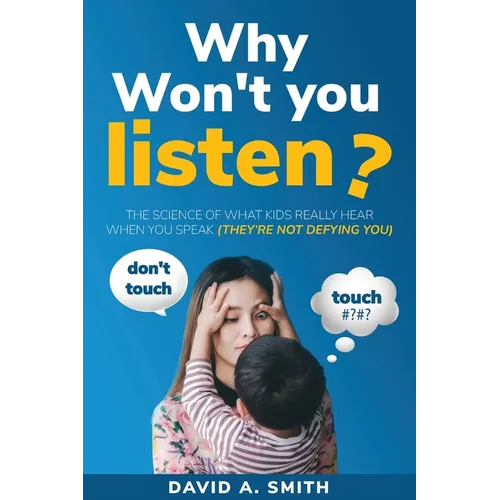
Your four-year-old just looked you straight in the eye while you said "don't touch that." Then touched it. While. Still. Looking. At. You.
Sound familiar?
Here's what's actually happening: They're not defying you. They literally cannot hear the "don't" part yet. Their brain processes "TOUCH THAT" before the negation even registers.
This isn't defiance. It isn't bad parenting. It's neuroscience nobody ever told you about.
WHAT IF THE PROBLEM ISN'T YOUR CHILD-IT'S HOW THEIR BRAIN WORKS?
Children aren't ignoring you-they genuinely can't process what you're saying the way you think they can. Their developing brains work on completely different patterns than adult brains, and once you understand these patterns, everything changes.
INSIDE THIS BOOK, YOU'LL DISCOVER:
Why "don't run" makes them run faster-and the exact words that actually work
Why they sit perfectly at home but melt down at restaurants-and the simple adjustment that prevents it
Why they lose it over the "wrong" cup at bedtime-and how to handle it without the drama
What "be good" actually sounds like to a child's brain (spoiler: it means nothing)
The biological reason they can't "just listen"-and what to do instead
Age-specific strategies that work immediately-because 3-year-old brains and 7-year-old brains need different approaches
THIS ISN'T ANOTHER DISCIPLINE MANUAL
You won't find timeout charts or reward systems here. Instead, you'll understand why your words aren't landing-and learn communication techniques that align with how young brains actually process information. When you speak their brain's language, they don't need to be "made" to listen. They finally can.
PERFECT FOR:
Exhausted parents who've tried everything
Teachers dealing with kids who "never listen"
Grandparents whose old tricks suddenly stopped working
Therapists and counselors working with "difficult" children
Anyone who talks to kids and wants to actually be heard
THE SHIFT YOU'LL FEEL:
That moment when your child "ignores" you? It will move from frustration to understanding. Once you know what's happening in their developing brain, you'll stop taking it personally-and start communicating in ways they can actually receive.
Your child doesn't need to change. Your approach does.
Stop wondering "Why won't you listen?" Start understanding how they actually hear you.
Includes practical exercises, real-world examples, and age-specific strategies you can use today.