Skip to content
Welcome To Our Store.
100,000+ Products for Home, Medical, Office & Classroom Needs
Search
Skip to product information
1 of 2

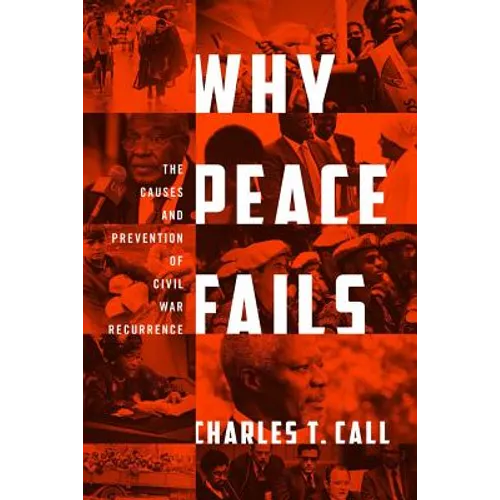
Why Peace Fails: The Causes and Prevention of Civil War Recurrence - Paperback

$66.51 USD
$66.51 USD
Sale Sold out
Shipping calculated at checkout.
In stock (100 units), ready to be shipped

Available Offers

Fastest Delivery Tomorrow With Vip DealOrder within 1 hr 8 mins.

Instant 10% Discount On HDFC Banks Credit/Debit Cards EMI and CreditCard

Secure checkout with
  • American Express
  • Apple Pay
  • Diners Club
  • Discover
  • Google Pay
  • Mastercard
  • PayPal
  • Shop Pay
  • Visa

Flight Range: Up to 1,000 meters (3,280 feet)

Maximum Speed: 45 kilometers per hour (28 miles per hour)

For all orders exceeding a value of 100USD shipping is offered for free.

Returns will be accepted for up to 10 days of Customer’s receipt or tracking number on unworn items. You, as a Customer, are obliged to inform us via email before you return the item.

Otherwise, standard shipping charges apply. Check out our delivery Terms & Conditions for more details.

View Product Details
Shopping cart
Product Product subtotal Quantity Price Product subtotal
Why Peace Fails: The Causes and Prevention of Civil War Recurrence - Paperback
$66.51/ea
$0.00
$66.51/ea $0.00

Product Description

by Charles T. Call (Author), Charles T. Call (Contribution by)

Why does peace fail? More precisely, why do some countries that show every sign of having successfully emerged from civil war fall once again into armed conflict? What explains why peace "sticks" after some wars but not others?

In this illuminating study, Charles T. Call examines the factors behind fifteen cases of civil war recurrence in Africa, Asia, the Caucasus, and Latin America. He argues that widely touted explanations of civil war--such as poverty, conflict over natural resources, and weak states--are far less important than political exclusion. Call's study shows that inclusion of former opponents in postwar governance plays a decisive role in sustained peace.

Why Peace Fails ultimately suggests that the international community should resist the temptation to prematurely withdraw resources and peacekeepers after a transition from war. Instead, international actors must remain fully engaged with postwar elected governments, ensuring that they make room for former enemies.

Author Biography

Charles T. Call is an assistant professor in the School of International Studies at American University. He was previously a senior fellow at the US Institute of Peace and is the editor of Building States to Build Peace and Constructing Security and Justice after War. He has conducted research in Afghanistan, West Africa, Bosnia, Kosovo, Haiti, Colombia, Chechnya, and Central America.


Number of Pages: 328
Dimensions: 0.81 x 9 x 6.33 IN
Illustrated: Yes
Publication Date: April 15, 2012
you might like
