


Product Description
by Philip W. Cooper Jr. (Author)
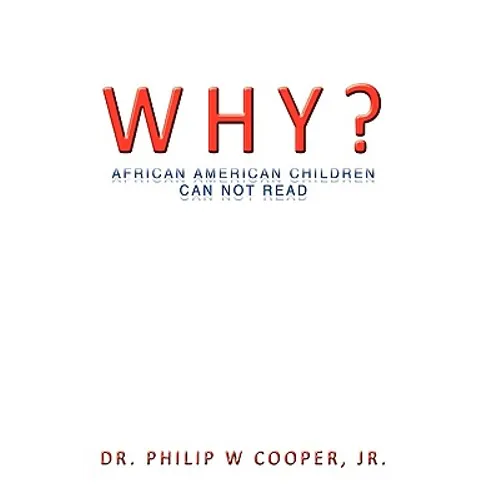
WHY?
Why do African American children fill the rolls of low achievers?
Why do African American children fill the rolls of needs improvement schools?
Why do African American children fill the rolls of high school dropouts?
Why do African American children fill the rolls of special education classes?
The answers to these questions are not found in the traditional educational setting; nor are they found in the plethora of text devoted to social, economic, and educational reforms.
The sub proficiency performances of many African American children in reading and reading comprehension contribute significantly to the educational, social, health and economic gaps in our schools and our society. As witnessed by many, it is the ability to read which allows a child to transcend even the poorest environment and social circumstances, and succeed in life. The ability to read is not innate; it is a learned skill that is dependent on the development of the neural (brain) cells necessary for memory. Sleep disordered breathing conditions, like Obstructive Sleep Apnea Syndrome (OSAS), impact the development of these cells and learning to read becomes difficult. The early diagnosis and treatment of OSAS will give these children an opportunity to learn to read, not be left behind, and develop to their maximum potential.
IF YOUR CHILD SNORES, HE/SHE MAY HAVE OBSTRUCTIVE SLEEP APNEA SYNDROME.
ASK YOUR DOCTOR TODAY.