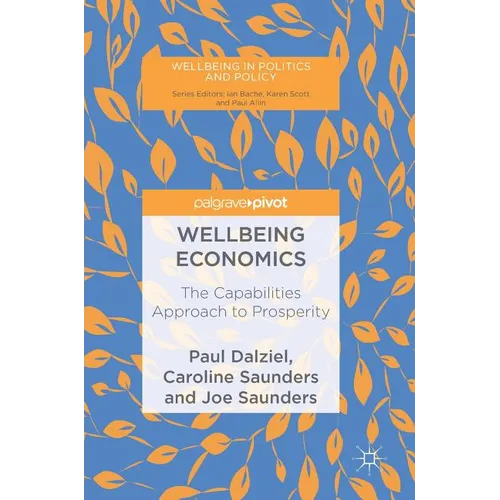
Product Description
by Paul Dalziel (Author), Caroline Saunders (Author), Joe Saunders (Author)
Economists have long sought to maximise economic growth, believing this to be their best contribution to improving human welfare. That approach is not sustainable in the face of ongoing issues such as global climate change, environmental damage, rising inequality and enduring poverty. Alternatives must be found.
This open access book addresses that challenge. It sets out a wellbeing economics framework that directly addresses fundamental issues affecting wellbeing outcomes. Drawing inspiration from the capabilities approach of Nobel Prize winner Amartya Sen, the book demonstrates how persons can enhance prosperity through their own actions and through collaboration with others.
The book examines national public policy, but its analysis also focuses on choices made by individuals, households, families, civil society, local government and the global community. It therefore offers important insights for anyone concerned with improving personal wellbeing and community prosperity.
Back Jacket
Economists have long sought to maximise economic growth, believing this to be their best contribution to improving human welfare. That approach is not sustainable in the face of ongoing issues such as global climate change, environmental damage, rising inequality and enduring poverty. Alternatives must be found.
This open access book addresses that challenge. It sets out a wellbeing economics framework that directly addresses fundamental issues affecting wellbeing outcomes. Drawing inspiration from the capabilities approach of Nobel Prize winner Amartya Sen, the book demonstrates how persons can enhance prosperity through their own actions and through collaboration with others.
The book examines national public policy, but its analysis also focuses on choices made by individuals, households, families, civil society, local government and the global community. It therefore offers important insights for anyone concerned with improving personal wellbeing and community prosperity.
Paul Dalziel is Professor of Economics and Deputy Director of the Agribusiness and Economics Research Unit at Lincoln University, New Zealand.
Caroline Saunders is Professor of Trade and Environmental Economics and Director of the Agribusiness and Economics Research Unit at Lincoln University, New Zealand.Joe Saunders is Assistant Professor in Post-Kantian Philosophy at the University of Durham, UK.
Author Biography
Paul Dalziel is Professor of Economics and Deputy Director of the Agribusiness and Economics Research Unit at Lincoln University, New Zealand.
Caroline Saunders is Professor of Trade and Environmental Economics and Director of the Agribusiness and Economics Research Unit at Lincoln University, New Zealand.
Joe Saunders is Assistant Professor in Post-Kantian Philosophy at the University of Durham, UK.