


Product Description
by Mack R. Herring (Author), National Aeronautics and Administration (Author)
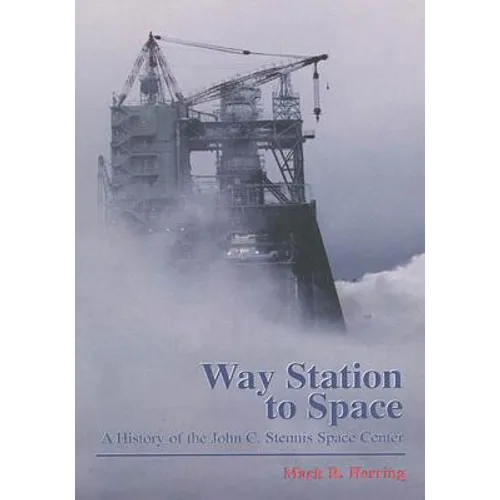
"Way Station to Space is a history of the NASA John C. Stennis Space Center, one of NASA's 10 Field Centers which was built in the enormously exciting days of the Apollo program for a specific purpose-to static fire and certify the huge Saturn V boosters used in the Apollo lunar landing program. With an eye to the future, the facility was planned as a national testing site for large propulsion systems that NASA might use for 25 to 50 years. This book provides the reader with a study of the Apollo era when NASA engineers, technicians, and managers were engaged in that fantastic mission. It captures a sense of the excitement and determination of the NASA team as it prepared for those historic journeys to our nearest planetary neighbor. This book, however, also illustrates the evolution of the south Mississippi facility beyond the Apollo era. The development of the traditions and pride of the NASA Government and contractor teams, formulated during those early years, is likewise portrayed. As is indicated in the text, few of the men and women of that time are still actively working with us, but their tradition of excellence and hard work lives on. As the Apollo program began to ebb, the Nation's focus shifted away from the most ambitious plans for space exploration-to colonize the Moon, construct a Space Station, and mount a human mission to Mars-to less costly endeavors. Under creative management, the Mississippi team began to study the Nation's new priorities with the intention of becoming an integral part of the changing times. The Mississippi Test Facility (MTF-former name of SSC) diversified and brought in other Federal and State agencies to help share the cost of the Center and use of the developing technology. MTF personnel began looking for other customers, private and commercial, in addition to their new Government tenants. The men and women of the MTF were, in a real sense, "reinventing" Government over 25 years ago, long before that concept came into vogue. "Way Station to Space takes the reader back through those interesting times and relates the story of how the small team evolved into a paradigm of engineering and scientific cooperation for others to follow. The MTF team recycled facilities and resources, turning part of the huge Center into a diverse environmental research center. The Stennis Space Center now serves as a model of multiagency synergy and is home to over 30 Federal and State agencies, universities, and private industries. This new addition to the NASA history series also illustrates how the men and women of this south Mississippi facility met challenges head-on. They not only preserved their installation, but they built a new foundation for the future. As a result in 1996, the Stennis Space Center was officially designated as NASA's Lead Center for rocket propulsion testing and in 1997 as the Lead Center for Commercial Remote Sensing. "Way Station to Space is not only the history of one of NASA's Centers, it is also an allegory of the Center's relationship to the local communities in Mississippi and Louisiana, its sister Centers, and to NASA Headquarters. Not only does this book tell an interesting story about the Stennis Space Center and NASA's first decades of space exploration, it also offers a guide to the changing times ahead as we approach the new millennium. Perhaps just as importantly, "Way Station to Space captures the true spirit of NASA that abides with us today as we meet the challenges of tomorrow.



