Skip to content
Welcome To Our Store.
100,000+ Products for Home, Medical, Office & Classroom Needs
Search
Skip to product information
1 of 1

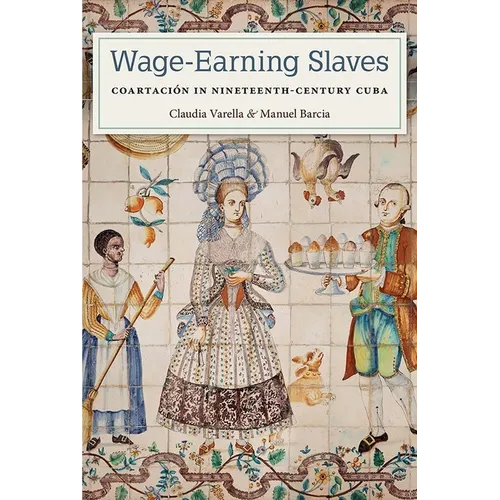
Wage-Earning Slaves: Coartación in Nineteenth-Century Cuba - Hardcover

$137.70 USD
$137.70 USD
Sale Sold out
Shipping calculated at checkout.
In stock (100 units), ready to be shipped

Available Offers

Fastest Delivery Tomorrow With Vip DealOrder within 1 hr 8 mins.

Instant 10% Discount On HDFC Banks Credit/Debit Cards EMI and CreditCard

Secure checkout with
  • American Express
  • Apple Pay
  • Diners Club
  • Discover
  • Google Pay
  • Mastercard
  • PayPal
  • Shop Pay
  • Visa

Flight Range: Up to 1,000 meters (3,280 feet)

Maximum Speed: 45 kilometers per hour (28 miles per hour)

For all orders exceeding a value of 100USD shipping is offered for free.

Returns will be accepted for up to 10 days of Customer’s receipt or tracking number on unworn items. You, as a Customer, are obliged to inform us via email before you return the item.

Otherwise, standard shipping charges apply. Check out our delivery Terms & Conditions for more details.

View Product Details
Shopping cart
Product Product subtotal Quantity Price Product subtotal
Wage-Earning Slaves: Coartación in Nineteenth-Century Cuba - Hardcover
$137.70/ea
$0.00
$137.70/ea $0.00

Product Description

by Claudia Varella (Author), Manuel Barcia (Author)

Wage-Earning Slaves is the first systematic study of coartaci n, a process by which slaves worked toward purchasing their freedom in installments, long recognized as a distinctive feature of certain areas under Spanish colonial rule in the nineteenth century. Focusing on Cuba, this book reveals that instead of providing a "path to manumission," the process was often rife with obstacles that blocked slaves from achieving liberty.

Claudia Varella and Manuel Barcia trace the evolution of coartaci n in the context of urban and rural settings, documenting the lived experiences of slaves through primary sources from many different archives. They show that slave owners grew increasingly intolerant and abusive of the process, and that the laws of coartaci n were not often followed in practice. The process did not become formalized as a contract between slaves and their masters until 1875, after abolition had already come. Varella and Barcia discuss how coartados did not see an improvement in their situation at this time, but essentially became wage-earning slaves as they continued serving their former owners.

The exhaustive research in this volume provides valuable insight into how slaves and their masters negotiated with each other in the ever-changing economic world of nineteenth-century Cuba, where freedom was not always absolute and where abuses and corruption most often prevailed.


Number of Pages: 236
Dimensions: 0.69 x 9.02 x 5.98 IN
Illustrated: Yes
Publication Date: December 08, 2020
you might like
