


Product Description
by Brad Beaven (Author)
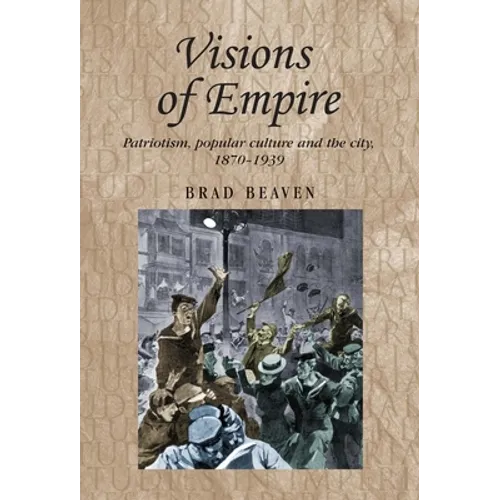
This book offers a ground-breaking perspective on how imperial culture was disseminated from the 1890s onward. It identifies the important synergies that grew between a new civic culture and the wider imperial project. Three case studies are considered against an extensive analysis of seminal and current historiography.
Front Jacket
The emergence of a vibrant imperial culture and its pervasive influence in British society from the 1890s both fascinated and appalled contemporaries. It has also consistently provoked controversy among historians. This book offers a ground-breaking perspective on how imperial culture was disseminated. It identifies the important synergies that grew between a new civic culture of the late nineteenth century and the wider imperial project. From the late nineteenth century, pleasure seekers enjoyed the spectacular depiction of empire on stage and screen. Meanwhile school children began to learn about the imperial project through new curricula and events such as Empire Day. The demand for imperial loyalty also loomed large over recruiting campaigns for both the Boer and First World Wars. However, the passion for empire also fostered widespread anxieties. 'Urban explorers' imitated imperial adventurers in Africa and found similar 'savagery' in the underworld of the English city. Beaven shows that the ebb and flow of imperial enthusiasm was shaped by a fusion of local patriotism and a broader imperial identity. Imperial culture was neither generic nor unimportant but was instead multi-layered and recast to capture the concerns of a locality. The book investigates the diffusion of civic and imperial cultures in three representative English cities. These case studies, which draw from a rich seam of primary sources, are considered against an extensive analysis of seminal and current historiography. This renders the book invaluable to those interested in the fields of imperialism, social and cultural history, popular culture, historical geography and urban history.
Back Jacket
The emergence of a vibrant imperial culture and its pervasive influence in British society from the 1890s both fascinated and appalled contemporaries. It has also consistently provoked controversy among historians. This book offers a ground-breaking perspective on how imperial culture was disseminated. It identifies the important synergies that grew between a new civic culture of the late nineteenth century and the wider imperial project.
From the late nineteenth century, pleasure seekers enjoyed the spectacular depiction of empire on stage and screen. Meanwhile school children began to learn about the imperial project through new curricula and events such as Empire Day. The demand for imperial loyalty also loomed large over recruiting campaigns for both the Boer and First World Wars. However, the passion for empire also fostered widespread anxieties. 'Urban explorers' imitated imperial adventurers in Africa and found similar 'savagery' in the underworld of the English city. Beaven shows that the ebb and flow of imperial enthusiasm was shaped by a fusion of local patriotism and a broader imperial identity. Imperial culture was neither generic nor unimportant but was instead multi-layered and recast to capture the concerns of a locality. The book investigates the diffusion of civic and imperial cultures in three representative English cities. These case studies, which draw from a rich seam of primary sources, are considered against an extensive analysis of seminal and current historiography. This renders the book invaluable to those interested in the fields of imperialism, social and cultural history, popular culture, historical geography and urban history.Author Biography
Brad Beaven is Principal Lecturer in History at the University of Portsmouth



