Skip to content
Save 5% on your next order with code PREMIUM5!
100,000+ Products for Home, Medical, Office & Classroom Needs
Search
Skip to product information
1 of 1

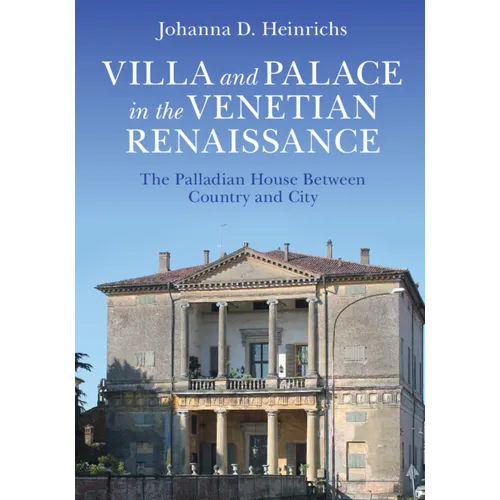
Villa and Palace in the Venetian Renaissance: The Palladian House Between Country and City - Hardcover

$198.90 USD
$198.90 USD
Sale Sold out
Shipping calculated at checkout.
In stock (36 units), ready to be shipped

Available Offers

Fast delivery available on most orders

Multiple secure payment options accepted

Secure checkout with
  • American Express
  • Apple Pay
  • Diners Club
  • Discover
  • Google Pay
  • Mastercard
  • PayPal
  • Shop Pay
  • Visa

Flight Range: Up to 1,000 meters (3,280 feet)

Maximum Speed: 45 kilometers per hour (28 miles per hour)

For all orders exceeding a value of 100USD shipping is offered for free.

Returns will be accepted for up to 10 days of Customer’s receipt or tracking number on unworn items. You, as a Customer, are obliged to inform us via email before you return the item.

Otherwise, standard shipping charges apply. Check out our delivery Terms & Conditions for more details.

View Product Details
Shopping cart
Product Product subtotal Quantity Price Product subtotal
Villa and Palace in the Venetian Renaissance: The Palladian House Between Country and City - Hardcover
$198.90/ea
$0.00
$198.90/ea $0.00

Product Description

by Johanna D. Heinrichs (Author)

Designed by Andrea Palladio, the Villa Pisani at Montagnana was the country residence of a Venetian nobleman, Francesco Pisani. Unusually, its design combines features of both villa and palace architecture, and it challenges the conventional view of a villa as subsidiary to the urban palace, the true seat of an elite family. In this book, Johanna D. Heinrichs offers the first comprehensive study of the Villa Pisani, providing a critical analysis of Palladio's hybrid design, the villa's original setting and uses, and the preoccupations of its patron. Heinrichs argues that the Villa Pisani served as the owner's principal residence. She also shows how a microhistorical approach can provide new insights about a familiar Renaissance building type and about the theory and practice of a canonical architect. Based on scrutiny of original documents and visual sources, Heinrichs's study is supported by a rich illustration program composed of photographs, plans, maps, and digital reconstructions.


Number of Pages: 375
Dimensions: 0.92 x 10.13 x 7.26 IN
Publication Date: March 06, 2025
you might like