Skip to content
Save 5% on your next order with code PREMIUM5!
100,000+ Products for Home, Medical, Office & Classroom Needs
Search
Skip to product information
1 of 1

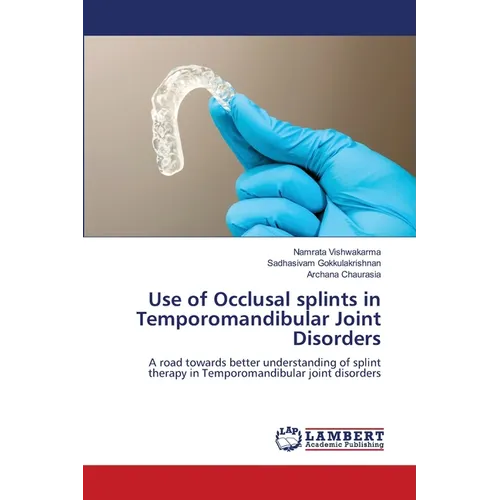
Use of Occlusal splints in Temporomandibular Joint Disorders - Paperback

$67.68 USD
$67.68 USD
Sale Sold out
Shipping calculated at checkout.
In stock (100 units), ready to be shipped

Available Offers

Fast delivery available on most orders

Multiple secure payment options accepted

Secure checkout with
  • American Express
  • Apple Pay
  • Diners Club
  • Discover
  • Google Pay
  • Mastercard
  • PayPal
  • Shop Pay
  • Visa

Flight Range: Up to 1,000 meters (3,280 feet)

Maximum Speed: 45 kilometers per hour (28 miles per hour)

For all orders exceeding a value of 100USD shipping is offered for free.

Returns will be accepted for up to 10 days of Customer’s receipt or tracking number on unworn items. You, as a Customer, are obliged to inform us via email before you return the item.

Otherwise, standard shipping charges apply. Check out our delivery Terms & Conditions for more details.

View Product Details
Shopping cart
Product Product subtotal Quantity Price Product subtotal
Use of Occlusal splints in Temporomandibular Joint Disorders - Paperback
$67.68/ea
$0.00
$67.68/ea $0.00

Product Description

by Namrata Vishwakarma (Author), Sadhasivam Gokkulakrishnan (Author), Archana Chaurasia (Author)

Despite the unanswered questions on the physiologic mechanisms that explain the effectiveness of intra-oral appliances on reducing symptoms of TMD, there is still a plethora of documentation that intra-oral appliance when used in the management plan accurately, can contribute to the relief of TMD symptoms. The clinician is encouraged to evaluate fully each particular patient case in an effort to develop a differential diagnosis that leads to effective management plan.Before commencing any appliance therapy for a TMD, the clinician should be confident that the patient will benefit from the therapeutic approach. If the symptoms reduced that will provide additional diagnostic information. The clinician also needs to consider that 40% of patients suffering from TMD demonstrate favorable response to therapy from a placebo effect. As with any treatment, a good patient-dentist relationship and concomitant with patent education, can alloy patient feelings and anxieties. It can contribute to a positive and favorable response to intra-oral occlusal splint therapy.


Number of Pages: 80
Dimensions: 0.19 x 9 x 6 IN
Publication Date: February 24, 2023
you might like
