


Product Description
by Richard Seaford (Editor)
This volume brings together Hellenists and Indologists representing a variety of perspectives on the similarities and differences between the two cultures. It offers a collaborative contribution to the burgeoning interest in the Axial Age and will be of interest to anyone intrigued by the big questions inspired by the ancient world.
Back Jacket
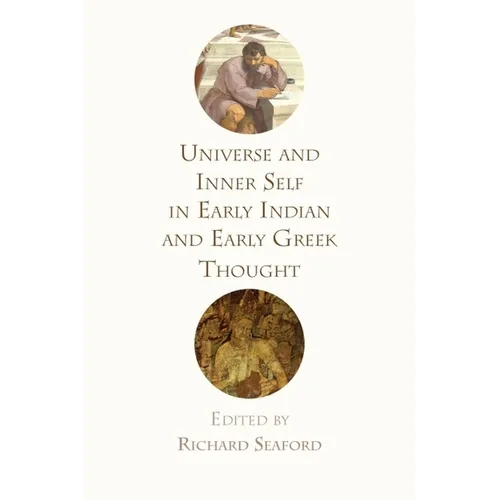
PPC spine 21mm, 274 x 373mm. 'The philosophical traditions of Greece and India are divergent but also show striking convergences. This book is an important and valuable contribution to the comparative study of the two ancient cultures. The various chapters are learned and sophisticated and considerably enrich our understanding of Greek and Indian philosophy.' Phiroze Vasunia, University College London How can we explain the remarkable similarities between early Indian and early Greek philosophy? Around the middle of the first millennium BCE there occurred a revolution in thought, with novel ideas such as that understanding the inner self is both vital for human well-being and central to understanding the universe. This intellectual transformation is sometimes called the beginning of philosophy. The revolution occurred in both India and Greece, but not in the vast Persian Empire that divided them. How was this possible? This is a puzzle that has never been solved. This volume brings together Hellenists and Indologists representing a variety of perspectives on the similarities and differences between the two cultures, and on how to explain them. It offers a collaborative contribution to the burgeoning interest in the Axial Age and is of interest to those intrigued by the big questions inspired by the ancient world. Richard Seaford is Emeritus Professor of Ancient Greek at the University of Exeter. Cover images: Bodhisattva Padmapani, Ajanta, cave 1, India, Abdulsayed/Wikimedia Commons. Detail from The School of Athens, 1511, Raffaello Sanzio da Urbino, Wikimedia Commons. Cover design: [EUP logo] edinburghuniversitypress.com ISBN 978-1-4744-1099-1 Barcode
Author Biography
Richard Seaford is Emeritus Professor of Ancient Greek at the Univerity of Exeter. He has been a Fellow of the National Humanities Center in North Carolina, Distinguished Visiting Professor at the University of Texas at Austin, and President of the Classical Association (UK). He is the author of numerous articles and books ranging from Homer to the New Testament.



