Product Description
by Kenneth G. Sutherland (Author)
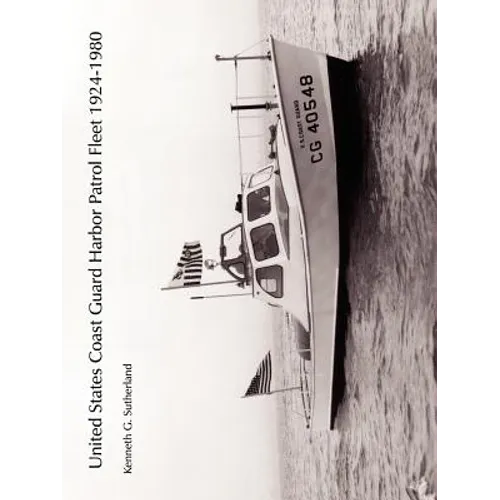
One of the most important activities of the U.S. Coast Guard is Port Security under the control of the Captain of the Port. This book is a first attempt to collect and share data on the COTP. small boats. On June 15th, 1917, Congress passed the Espionage Act, forming the basis for the Coast Guard's Port Security and Port Safety Missions. In 1918, jurisdiction over the anchorage and movement of vessels in harbors changed from the War Department to the Treasury Department. The Secretary of the Treasury designated Coast Guard officers as Captains of the Ports. On August 5th, 1935, Congress passed the Anti-Smuggling Act, broadening the Coast Guard's jurisdiction in law enforcement. On September 8th, 1939, President Roosevelt proclaimed a national emergency. As a result, late in 1939 the responsibility for sealing radios and checking vessels arriving in port was added to the Coast Guard's duties. On June 27th, 1940, President Roosevelt invoked the Espionage Act of 1917 to govern the anchorage and movement of all vessels in U. S. waters. This began the Coast Guard's Port Security activity during World War II. The Korean War in 1950 led to the Magnuson Act, amending the old Espionage Act. The new bill authorized the President to invoke a strong Port Security Program. President Truman acted almost at once. This executive order has never been rescinded. In 1952, the Coast Guard yard built 15 COTP 40' Utility Boats MK1 for South Korea and approximately twentyseven 40' UTB MK1s for service in the French Navy in Indochina under the Mutual Defense Assistance Program (MDAP). These UTBs were transferred to Vietnam with the establishment of the Vietnamese Navy on January 1st, 1955. On May 10th, 1956, Public Law 519 brought all previously uninspected vessels, on navigable waters, carrying more than six passengers for hire, under Coast Guard inspection. On April 3rd, 1970, the Water Quality Improvement Act was passed. This broadened the Coast Guard's responsibility for the preventio