Product Description
by Katherine A. LeBow (Author)
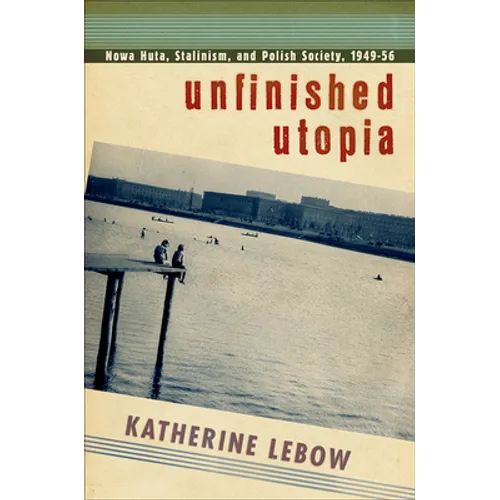
Unfinished Utopia is a social and cultural history of Nowa Huta, dubbed Poland's "first socialist city" by Communist propaganda of the 1950s. Work began on the new town, located on the banks of the Vistula River just a few miles from the historic city of Kraków, in 1949. By contrast to its older neighbor, Nowa Huta was intended to model a new kind of socialist modernity and to be peopled with "new men," themselves both the builders and the beneficiaries of this project of socialist construction. Nowa Huta was the largest and politically most significant of the socialist cities built in East Central Europe after World War II; home to the massive Lenin Steelworks, it epitomized the Stalinist program of forced industrialization that opened the cities to rural migrants and sought fundamentally to transform the structures of Polish society.Focusing on Nowa Huta's construction and steel workers, youth brigade volunteers, housewives, activists, and architects, Katherine Lebow explores their various encounters with the ideology and practice of Stalinist mobilization by seeking out their voices in memoirs, oral history interviews, and archival records, juxtaposing these against both the official and unofficial transcripts of Stalinism. Far from the gray and regimented landscape we imagine Stalinism to have been, the fledgling city was a colorful and anarchic place where the formerly disenfranchised (peasants, youth, women) hastened to assert their leading role in "building socialism"--but rarely in ways that authorities had anticipated.
Author Biography
Katherine Lebow is an Elise Richter Fellow at the Vienna Wiesenthal Institute for Holocaust Studies.