Product Description
by Nicole M. Joseph (Editor)
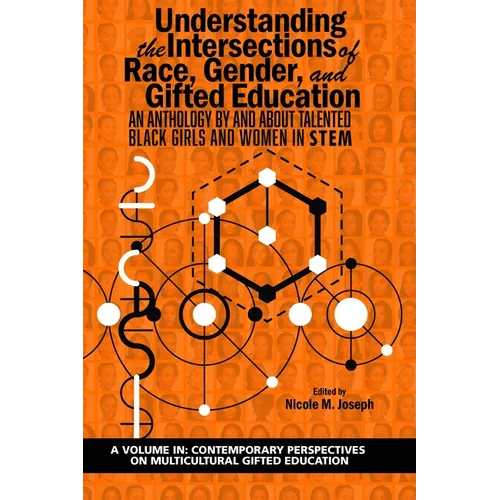
This book seeks to understand the complexities of talented and high-performing Black girls and women in STEM across the P-20 trajectory. Analogously, this volume aims to understand the intersections between giftedness, its identification, and racial, gender, and academic discipline identities. The dearth of literature on this subject suggests that Black girls and women have unique experiences in gifted programming, in large part because of factors associated with gifted programs in general. Key factors affecting Black students, and Black girls in particular, are identification and underrepresentation. These factors can be shaped by interlocking systems of racism, classism, gender bias, and other forms of oppression.
Teachers in the P-12 educational system are the first identifiers for gifted programming and look for student characteristics, such as natural leadership, inquisitiveness, and students' desire to be in gifted programs. Because many Black girls are stereotyped and teachers rarely have deep understanding of cultural differences, Black girls are less likely to be identified for gifted programming. More specifically, Black girls' lack of representation in gifted mathematics or STEM programs contradicts research that finds that girls reach several developmental advantages ahead of boys. For example, research has shown that girls talk and read earlier, receive higher grades in elementary school, and drop-out less often than boys. Other studies have also shown that Black girls have higher mathematics career aspirations than their White and Latina female peers; yet, they are rarely represented in gifted math and Advanced Placement (AP) math programs. Furthermore, the underrepresentation of urban, low-income African-American students in gifted education is related to low test scores, student and family choice, a lack of teacher referral, and a mismatch between home and school cultures.
Some high-performing Black girls and women are participating in programs that nurture and support their racial and gender identities and contribute to them developing into strong and efficacious girls and women who have agency in their lives. This anthology includes studies that illustrate the complexities of intersectionality in various STEM programs, while also demonstrating that increasing access to STEM for Black girls and women is doable.