Skip to content
Welcome To Our Store.
100,000+ Products for Home, Medical, Office & Classroom Needs
Search
Skip to product information
1 of 1

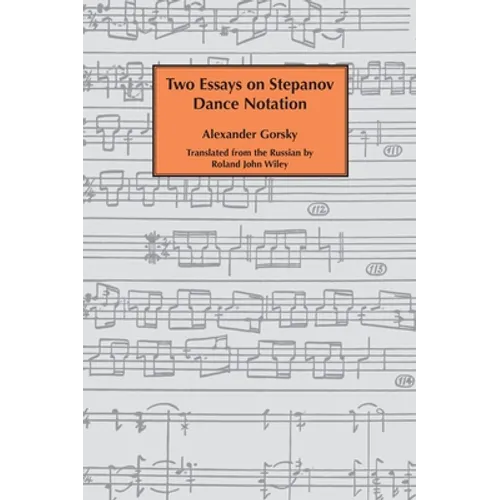
Two essays on Stepanov dance notation. - Hardcover

$36.00 USD
$36.00 USD
Sale Sold out
Shipping calculated at checkout.
In stock (100 units), ready to be shipped

Available Offers

Fastest Delivery Tomorrow With Vip DealOrder within 1 hr 8 mins.

Instant 10% Discount On HDFC Banks Credit/Debit Cards EMI and CreditCard

Secure checkout with
  • American Express
  • Apple Pay
  • Diners Club
  • Discover
  • Google Pay
  • Mastercard
  • PayPal
  • Shop Pay
  • Visa

Flight Range: Up to 1,000 meters (3,280 feet)

Maximum Speed: 45 kilometers per hour (28 miles per hour)

For all orders exceeding a value of 100USD shipping is offered for free.

Returns will be accepted for up to 10 days of Customer’s receipt or tracking number on unworn items. You, as a Customer, are obliged to inform us via email before you return the item.

Otherwise, standard shipping charges apply. Check out our delivery Terms & Conditions for more details.

View Product Details
Shopping cart
Product Product subtotal Quantity Price Product subtotal
Two essays on Stepanov dance notation. - Hardcover
$36.00/ea
$0.00
$36.00/ea $0.00

Product Description

by Alexander Gorsky (Author), Roland John Wiley (Translator)

The Russian dancer and teacher Vladimir Stepanov
(1866 - 1896) developed a system of human movement
notation based on the principles of music notation,
details of which he published in French as Alphabet des
Movements du Corps Humain, in Paris in 1892. It was
accepted as a system of notation in both the Mariinsky
and Bolshoi ballet schools and much repertory was
notated in it.
The dancer, choreographer and teacher Alexander
Gorsky was a friend of Stepanov and an advocate of his
system. In 1899 he published two long essays explaining
the system in considerably more detail and with specifi c
relevance to the notation of classical ballet, for use as
textbooks by the students in the Mariinsky and Bolshoi
schools. It is these two essays, translated and edited
by the Russian ballet historian Professor Roland John
Wiley which are reproduced here.


Number of Pages: 98
Dimensions: 0.25 x 10 x 7 IN
Publication Date: November 30, 2019
you might like
