Product Description
by Jim Eckles (Author)
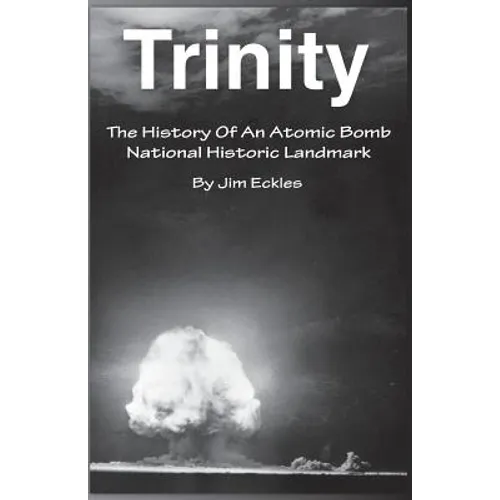
This is the history of Trinity Site, where the first atomic bomb was tested on July 16, 1945. The test, in an instant, ushered the world into the nuclear age. Unlike other books that focus on Los Alamos or the Manhattan Project, this book describes what went on at the bomb test site - how the test bed was prepared, who did the work, how they lived in the desert and what happened to the site after the war. The book is filled with first-hand accounts and anecdotes given to the author by the men who were actually there. Also, the story continues after the end of the war as the National Park Service proposed the site be declared a national monument. The Department of Army vetoed such proposals because the site sits in the middle of White Sands Missile Range. A compromise was to make the site a national historic landmark. Eckles explains what happened to many of the artifacts associated with the test, like Jumbo and the control bunker, how the site's open houses have grown to see thousands of visitors each year, and what the radiation issues are all about.Included are many photographs of the site, some of which have never been published before.In 2013 Eckles published "Pocketful of Rockets: History and Stories Behind White Sands Missile Range" that included a chapter on Trinity Site. He has extracted that chapter, one of 29 in the large volume, and reworked it, beefing it up with additional information and photos. It now stands alone as an educational and entertaining guide to Trinity.
Author Biography
Jim Eckles is a native of Nebraska. He arrived at White Sands Missile Range in 1977 as a member of the Public Affairs Office. For 30 years his job gave him the opportunity to leave his desk and discover the 3,200-square-mile range. One place he ended up many times was Trinity Site. During that time he coordinated and ran most of the Trinity Site open houses. He also conducted the majority of the tours to the site for VIPs, news media, and the many groups interested in the national landmark. One perk was meeting many of the scientists, engineers and support personnel, both military and civilian, who worked on the project. During formal interviews and just shooting the breeze, he collected information and anecdotes about the preparation of the bomb, its test, and what happened at Trinity Site after the war. Eckles retired from White Sands in 2007 and still lives in Las Cruces, N.M. He was elected to the missile range's Hall of Fame in 2013.