


Product Description
by Thomas Dacosta Kaufmann (Author)
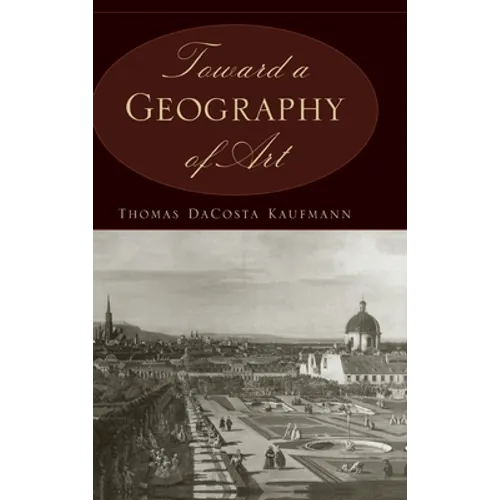
Art history traditionally classifies works of art by country as well as period, but often political borders and cultural boundaries are highly complex and fluid. Questions of identity, policy, and exchange make it difficult to determine the "place" of art, and often the art itself results from these conflicts of geography and culture. Addressing an important approach to art history, Thomas DaCosta Kaufmann's book offers essays that focus on the intricacies of accounting for the geographical dimension of art history during the early modern period in Europe, Latin America, and Asia.
Toward a Geography of Art presents a historical overview of these complexities, debates contemporary concerns, and completes its exploration with a diverse collection of case studies. Employing the author's expertise in a variety of fields, the book delves into critical issues such as transculturation of indigenous traditions, mestizaje, the artistic metropolis, artistic diffusion, transfer, circulation, subversion, and center and periphery. What results is a foundational study that establishes the geography of art as a subject and forces us to reconsider assumptions about the place of art that underlie the longstanding narratives of art history.Back Jacket
Art history traditionally classifies works of art by country as well as period, but often political borders and cultural boundaries are highly complex and fluid. Questions of identity, policy, and exchange make it difficult to determine the place of art, and often the art itself results from these conflicts of geography and culture. Addressing an important approach to art history, Thomas DaCosta Kaufmann's book offers essays that focus on the intricacies of accounting for the geographical dimension of art history during the early modern period in Europe, Latin America, and Asia.
Toward a Geography of Art presents a historical overview of these complexities, debates contemporary concerns, and completes its exploration with a diverse collection of case studies. Employing the author's expertise in a variety of fields, the book delves into critical issues such as transculturation of indigenous traditions, mestizaje, the artistic metropolis, artistic diffusion, transfer, circulation, subversion, and center and periphery. What results is a foundational study that establishes the geography of art as a subject and forces us to reconsider assumptions about the place of art that underlie the longstanding narratives of art history.Author Biography
Thomas DaCosta Kaufmann is a professor in the Department of Art and Archaeology at Princeton University. Among his many books are Court, Cloister, and City and The School of Prague, both published by the University of Chicago Press.