Product Description
by Henry F. Field (Author)
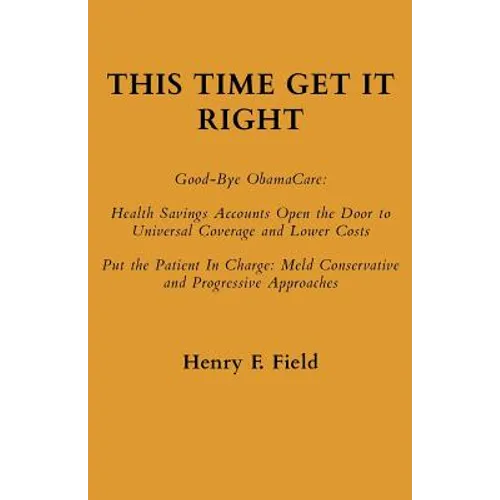
ObamaCare needs replacing. Instead of universal coverage at lower costs, it leaves tens of millions uncovered and increasingly greater numbers with skyrocketing premiums and costs, fewer insurance choices.
Its "top-down" approach means huge bureaucracies and prolix rules just to try to manage the entire health care field. This approach represents the "old" progressive thinking and it has reached a dead end. It lacks economic sense. A new progressive approach requires melding the old progressive ideals -- universal, affordable, accessible -- with sound economics. This leads to a "bottom-up" approach, which empowers the patient, not the bureaucrat. By ensuring everyone has the means to pay for health care, a market is restarted for services and products.
Health Savings Accounts (HSAs) are an existing way to accomplish this. By law, each HSA must be tied to coverage for all substantial health risks. These policies are high deductible, and the HSA is tax-free. This allows people to build resources adequate to their situation. People lacking the means get government credits or vouchers placed in their HSAs, allowing them to select the coverage they want and pay routine expenses from the account, and achieving universal coverage.
Pre-existing conditions are not properly part of these policies, since insurance is for risks, not certainties. A special program or exchange should exist, funded by government, if the public choice is being made to cover pre-existing conditions. The existing panoply of mandates and controls by state and federal government on what must be or must not be covered must be abolished. They are no longer needed or helpful where government is supporting the poor through their HSAs. Choice and options are the new watchword. Insurers must be free to offer people coverages suitable to their multifarious circumstances.
The result of these changes will be to open the health care world to competition and allow costs to be reduced as in any other market, without sacrificing quality. In regulated or government controlled system, including single payer, this cannot occur. Every effort to reduce costs also reduces quality. Only freedom and choice by the patient avoids this dilemma.
No discussion like this would be complete without consideration of the economics behind the rejection of "top-down" bureaucracy in favor of "bottom-up" support and freedom of choice. We briefly survey the best economic thinking on political economy from the past, including Adam Smith, F.A. Hayek, Milton Friedman, George Stigler, Ronald Coase, Gary Becker, Tyler Cowen, Harold Demsetz, and others. Fuller discussion appears in Field, The Bumbling Colossus (amazon 2012).