


Product Description
by Gregory Shaw (Author), John Milbank (Foreword by)
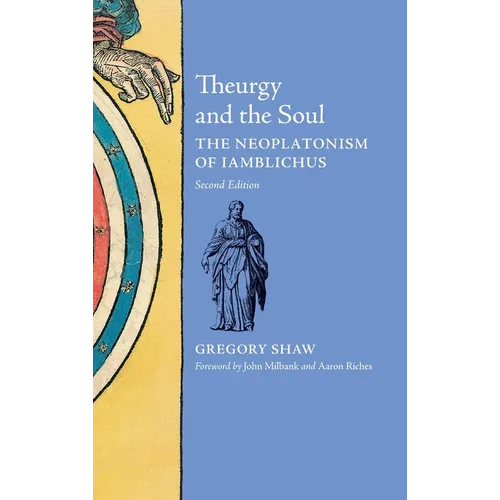
Theurgy and the Soul is a study of Iamblichus of Syria (ca. 240-325), whose teachings set the final form of pagan spirituality prior to the Christianization of the Roman Empire. Gregory Shaw focuses on the theory and practice of theurgy, a term meaning "divine action," the most controversial and significant aspect of Iamblichus's Platonism. Unlike previous Platonists, who stressed the elevated status of the human soul, Iamblichus taught that the soul descends completely into the body and requires the performance of theurgic rites--revealed by the gods--to unite the soul with the One.
Iamblichus was a seminal Platonic philosopher whose views on the soul and the importance of ritual profoundly influenced subsequent thinkers such as Proclus, Damascius, and Dionysius the Areopagite. Iamblichus's vision of a hierarchical cosmos united by divine ritual became the dominant worldview for the entire medieval world, and played an important role in the Renaissance Platonism of Marsilio Ficino. Ralph Waldo Emerson wrote that he expected a reading of Iamblichus to cause a "revival in the churches." Yet, until recently, modern scholars have dismissed him, seeing theurgy as ritual magic or an attempt to manipulate the gods. Shaw, however, shows that theurgy was a subtle and intellectually sophisticated attempt to apply Platonic and Pythagorean teachings to the full expression of human existence in the material world. This new edition includes a foreword by John Milbank and Aaron Riches showing the Christian sacramental implications of Iamblichean theurgy, and a new preface from the author.
"Theurgy and the Soul remains the one essential work not only on the mysterious yet influential figure of Iamblichus, but also on the emergence of religious or theurgical Neoplatonism. Shaw presents the reasoning and classical pedigree behind the sometimes obscure doctrines and practices belonging to this often misunderstood school of thought. His analysis reveals it as a dynamic and distinct form of philosophy in its own right, and not the last gasp of Hellenism before the onset of the Middle Ages." --L. MICHAEL HARRINGTON, author of Sacred Place in Early Medieval Neoplatonism
"Gregory Shaw's Theurgy and the Soul is the essential guide for those seeking entry to the experiential dimension of late Neoplatonism. The book is also philosophically sound, but its primary importance lies in bringing alive for sympathetic readers the symbolic and imaginal realities that animated the spiritual practices of Iamblichus and his followers. It reveals Late Antique Platonists clearly as mystical existentialists whose teachings are just as vital now as they were in antiquity." --JOHN BUSSANICH, author of The One and Its Relation to Intellect in Plotinus



