


Product Description
by Charles River (Author)
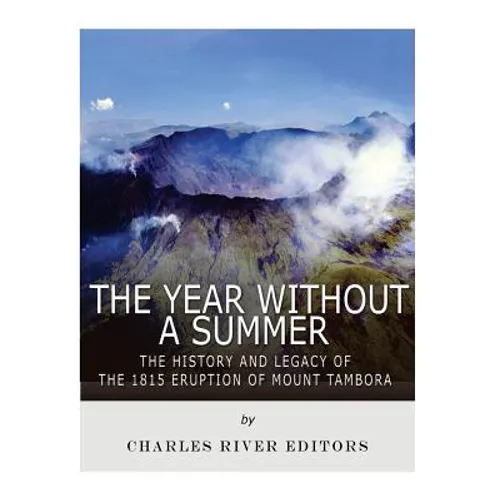
*Includes pictures *Includes contemporary accounts of the eruption and the environmental effects *Includes online resources and a bibliography for further reading "On my trip towards the western part of the island, I passed through nearly the whole of Dompo and a considerable part of Bima. The extreme misery to which the inhabitants have been reduced is shocking to behold. There were still on the road side the remains of several corpses, and the marks of where many others had been interred: the villages almost entirely deserted and the houses fallen down, the surviving inhabitants having dispersed in search of food." - Lt. Philips at Sumbawa In many ways history is the story of human beings trying to control their destinies by overcoming the effects of their physical surroundings. As too many have learned, the best they could often do was cope with nature, and the various natural disasters produced around the globe. Consider, for example, the year 1816, known as the "Year Without a Summer," which found the working poor in both Europe and America facing starvation caused by factors that few, if any, of them understood. They only knew that the time for planting, the longed for and planned for last days of winter, never came. Farmers who had been growing the same crops for decades began to be curious when, in April of that year, the snow still fell. By the first of May, they were outright concerned. In the weeks that followed, each faced a critical decision: go forward and plant as usual, trusting that the sun would again warm the earth, or continue to wait. In the end, their decisions made little difference, except perhaps that those who waited could survive a little longer by eating the seeds they had been saving. For in 1816, the seeds planted in the ground to sprout and grow usually did neither, because temperatures were never warm enough to nurture their progress. Instead, most lay dormant, while those hardier varieties did finally push their ways to the earth's surface, only to have the life frozen out of them by cold winds unabated by the sun's warmth. As the prolonged crisis went on, people around the planet tried to come to grips with what was happening. Preachers spoke of God's judgment, while farmers stood and prayed for relief, but neither group knew the truth: the cause of their misfortune lay not at their own doorsteps but thousands of miles away on an island they had never heard of. In this case, their destiny had been decided on the island of Sumbawa in Indonesia, thanks to a big volcano known as Mount Tambora. In one of the strongest volcanic explosions in recorded history, Mount Tambora in April 1815 and sent enough ash and dust into the air to block out some of the sun's warmth around the globe for nearly the next two years. In the aftermath of the April 1815 explosion, the summer of 1816 witnessed crops freeze in the fields and be buried under snow. Indian corn, a hardy staple of the early American diet, barely produced, and hay and wheat failed to grow. Traditional summer vegetables, such as cucumbers and tomatoes, failed to grow at all, leaving people severely deficient in the vitamins they produced. Animals and humans alike would go hungry, as there was less food for each. Ultimately, those who survived would tell stories of the desperate time, and speak with wonder about the fact that they had survived at all to tell their tales. The Year Without a Summer: The History and Legacy of the 1815 Eruption of Mount Tambora chronicles the immediate and long term effects of one of history's most important volcanic eruptions. Along with pictures of important people, places, and events, you will learn about the Year Without a Summer like never before.



