Skip to content
Welcome To Our Store.
100,000+ Products for Home, Medical, Office & Classroom Needs
Search
Skip to product information
1 of 1

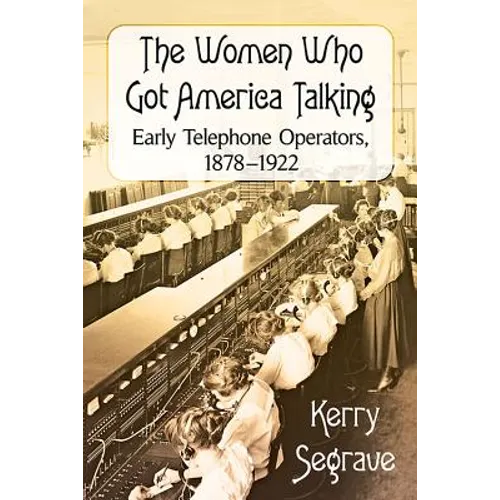
The Women Who Got America Talking: Early Telephone Operators, 1878-1922 - Paperback

$53.91 USD
$53.91 USD
Sale Sold out
Shipping calculated at checkout.
In stock (100 units), ready to be shipped

Available Offers

Fastest Delivery Tomorrow With Vip DealOrder within 1 hr 8 mins.

Instant 10% Discount On HDFC Banks Credit/Debit Cards EMI and CreditCard

Secure checkout with
  • American Express
  • Apple Pay
  • Diners Club
  • Discover
  • Google Pay
  • Mastercard
  • PayPal
  • Shop Pay
  • Visa

Flight Range: Up to 1,000 meters (3,280 feet)

Maximum Speed: 45 kilometers per hour (28 miles per hour)

For all orders exceeding a value of 100USD shipping is offered for free.

Returns will be accepted for up to 10 days of Customer’s receipt or tracking number on unworn items. You, as a Customer, are obliged to inform us via email before you return the item.

Otherwise, standard shipping charges apply. Check out our delivery Terms & Conditions for more details.

View Product Details
Shopping cart
Product Product subtotal Quantity Price Product subtotal
The Women Who Got America Talking: Early Telephone Operators, 1878-1922 - Paperback
$53.91/ea
$0.00
$53.91/ea $0.00

Product Description

by Kerry Segrave (Author)

When the need for telephone operators arose in the 1870s, the assumption was that they should all be male. Wages for adult men were too high, so boys were hired. They proved quick to argue with the subscribers, so females replaced them. Women were calmer, had reassuring voices and rarely talked back. Within a few years, telephone operators were all female and would remain so.

The pay was low and working conditions harsh. The job often impaired their health, as they suffered abuse from subscribers in silence under pain of dismissal. Discipline was stern--dress codes were mandated, although they were never seen by the public. Most were young, domestic and anything but militant. Yet many joined unions and walked picket lines in response to the severely capitalistic, sexist system they worked under.

Author Biography

Cultural historian Kerry Segrave is the author of dozens of books on such diverse topics as drive-in theaters, ticket-scalping, lie detectors, jukeboxes, smoking and shoplifting. He lives in British Columbia.


Number of Pages: 240
Dimensions: 0.5 x 9 x 5.9 IN
Publication Date: August 24, 2017
you might like
