Skip to content
Welcome To Our Store.
100,000+ Products for Home, Medical, Office & Classroom Needs
Search
Skip to product information
1 of 1

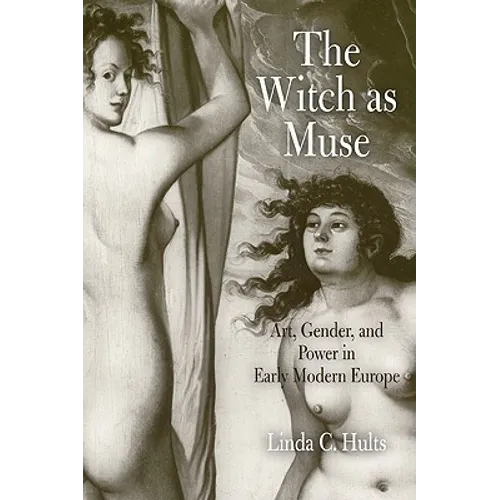
The Witch as Muse: Art, Gender, and Power in Early Modern Europe - Paperback

$47.18 USD
$47.18 USD
Sale Sold out
Shipping calculated at checkout.
In stock (100 units), ready to be shipped

Available Offers

Fast delivery available on most orders

Multiple secure payment options accepted

Secure checkout with
  • American Express
  • Apple Pay
  • Diners Club
  • Discover
  • Google Pay
  • Mastercard
  • PayPal
  • Shop Pay
  • Visa

Flight Range: Up to 1,000 meters (3,280 feet)

Maximum Speed: 45 kilometers per hour (28 miles per hour)

For all orders exceeding a value of 100USD shipping is offered for free.

Returns will be accepted for up to 10 days of Customer’s receipt or tracking number on unworn items. You, as a Customer, are obliged to inform us via email before you return the item.

Otherwise, standard shipping charges apply. Check out our delivery Terms & Conditions for more details.

View Product Details
Shopping cart
Product Product subtotal Quantity Price Product subtotal
The Witch as Muse: Art, Gender, and Power in Early Modern Europe - Paperback
$47.18/ea
$0.00
$47.18/ea $0.00

Product Description

by Linda C. Hults (Author)

Occult topics have long fascinated artists, and the subject of witches--their imagined bodies and fantastic rituals--was a popular one for painters and printmakers in early modern Europe. Focusing on several artists in depth, Linda C. Hults probes the historical and theoretical contexts of their work to examine the ways witches were depicted and the motivations for those depictions.

While studying the work of such artists as Dürer, Baldung, Jacques de Gheyn II, and Goya, Hults discerns patterns suggesting that the imagery of witchcraft served both as an expression of artistic license and as a tool of self-promotion for the artists. These imagined images of witches were designed to catch the attention of powerful and important patrons as witchcraft was being debated in political and intellectual centers. Dürer's early engravings of witnesses made in the wake of the Malleus maleficarum of 1487 were crucial in linking the seductive or aged female form with the dangers of witchcraft. The polarized idea of gender pervaded many aspects of early modern culture, including art theory. As the deluded female witch embodied the abuse of imagination and fantasy, so the male artist presented himself as putting those faculties to productive and reasoned use.

Author Biography

Linda C. Hults is Professor of Art History at The College of Wooster. She is the author of The Print in the Western World: An Introductory History.


Number of Pages: 360
Dimensions: 1 x 8.9 x 5.6 IN
Illustrated: Yes
Publication Date: March 29, 2011
you might like
