Skip to content
Welcome To Our Store.
100,000+ Products for Home, Medical, Office & Classroom Needs
Search
Skip to product information
1 of 1

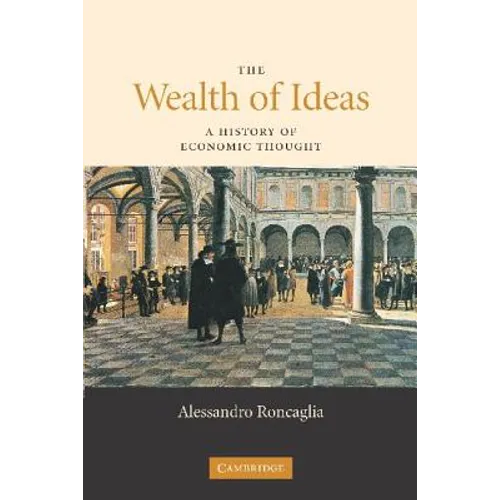
The Wealth of Ideas: A History of Economic Thought - Paperback

$67.32 USD
$67.32 USD
Sale Sold out
Shipping calculated at checkout.
In stock (100 units), ready to be shipped

Available Offers

Fast delivery available on most orders

Multiple secure payment options accepted

Secure checkout with
  • American Express
  • Apple Pay
  • Diners Club
  • Discover
  • Google Pay
  • Mastercard
  • PayPal
  • Shop Pay
  • Visa

Flight Range: Up to 1,000 meters (3,280 feet)

Maximum Speed: 45 kilometers per hour (28 miles per hour)

For all orders exceeding a value of 100USD shipping is offered for free.

Returns will be accepted for up to 10 days of Customer’s receipt or tracking number on unworn items. You, as a Customer, are obliged to inform us via email before you return the item.

Otherwise, standard shipping charges apply. Check out our delivery Terms & Conditions for more details.

View Product Details
Shopping cart
Product Product subtotal Quantity Price Product subtotal
The Wealth of Ideas: A History of Economic Thought - Paperback
$67.32/ea
$0.00
$67.32/ea $0.00

Product Description

by Alessandro Roncaglia (Author)

The Wealth of Ideas, first published in 2005, traces the history of economic thought, from its prehistory (the Bible, Classical antiquity) to the present day. In this eloquently written, scientifically rigorous and well documented book, chapters on William Petty, Adam Smith, David Ricardo, Karl Marx, William Stanley Jevons, Carl Menger, L on Walras, Alfred Marshall, John Maynard Keynes, Joseph Schumpeter and Piero Sraffa alternate with chapters on other important figures and on debates of the period. Economic thought is seen as developing between two opposite poles: a subjective one, based on the ideas of scarcity and utility, and an objective one based on the notions of physical costs and surplus. Professor Roncaglia focuses on the different views of the economy and society and on their evolution over time and critically evaluates the foundations of the scarcity-utility approach in comparison with the Classical/Keynesian approach.


Number of Pages: 598
Dimensions: 1 x 9 x 6 IN
Publication Date: November 30, 2006
you might like
