


Product Description
by Owen R. Cole Jr (Author)
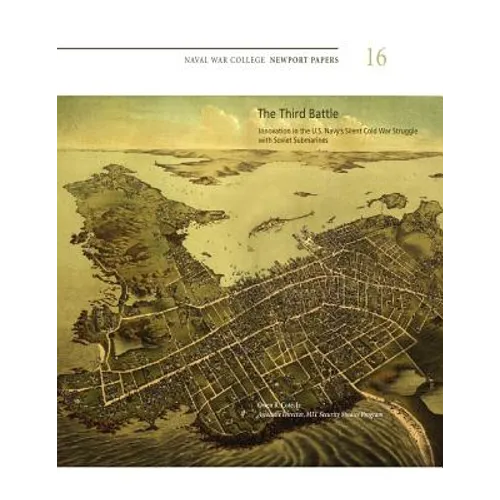
In a manuscript developed under the editorial leadership of Dr. Thomas B. Grassey, then Press editor, Dr. Cote argues that the U.S. Navy's innovative response to the Soviet submarine fleet during the Cold War represents the third great battle for control of the seas in the 20th century. Technology was always the key factor in the continuing seesaw peacetime race between the two superpowers. Dr. Cote, Associate Director of the Security Studies Program at the Massachusetts Institute of Technology, provides a critical groundbreaking perspective on this battle-quite different from the two that preceded it. During the two world wars, the then new and revolutionary submarine threatened the ability of the major naval powers to gain decisive control of the sea. In peacetime, the Allied powers were unable, or perhaps ultimately basically reluctant, to prepare innovative and effective measures to counter submarine use. In war, they then faced unrestricted submarine warfare and the attending significant losses. Those antisubmarine measures that were eventually developed were short-lived because of the close technological arms race between the combatants. It was only with the development in the mid-1980s of truly quiet Soviet nuclear submarines that the U.S. Navy decisively confronted the antisubmarine warfare challenge. Cote details the events leading to that point and presents a critical study of technological innovation with clear implications for challenges in the 21st century. This latest Newport Paper, the sixteenth in the generic series established in 1991, reflects the talents of the many who worked toward its production. David Chapman of Chapman and Partners, Warren, Rhode Island, is responsible for the overall design; the creative searching of Elizabeth Davis led to the discovery of the Newport map that will be the series' signature cover. Patricia Goodrich edited the manuscript with grace and style, under the thoughtful eye of Pelham Boyer, Managing Editor. Naval War College, Newport Papers.
Author Biography
OWEN R. COTE JR. is Associate Director of the Security Studies Program at the Massachusetts Institute of Technology (MIT). From 1993 to 1997, he was Assistant Director of the International Security Program at Harvard University's Belfer Center for Science and International Affairs. He is a co-editor of the journal International Security. Dr. Cote received his Ph.D. in Political Science from MIT, where he specialized in U.S. defense policy and international security affairs. His dissertation, which is being prepared for publication, analyzes the sources of innovation in military doctrine, using cases that compare U.S. responses to various Cold War nuclear vulnerability crises. Additionally, he is working on a book that analyzes and seeks to explain the success of the U.S. Navy's Cold War antisubmarine warfare effort. He has written widely, addressing military, naval, and nuclear doctrine and force structure issues, as well as the problem of securing nuclear weapons and materials in the former Soviet Union. In general, his current research and writing concentrates on the politics of innovation in U.S. military and naval doctrine in the new post-Cold War security environment. He has served as a consultant to the Office of the Secretary of Defense, the U.S. Navy, various defense laboratories, and industry. Dr. Cote graduated from Harvard College in 1982 and worked for three years at the Hudson Institute and the Center for Naval Analyses before returning to graduate school.