Skip to content
Save 5% on your next order with code PREMIUM5!
100,000+ Products for Home, Medical, Office & Classroom Needs
Search
Skip to product information
1 of 1

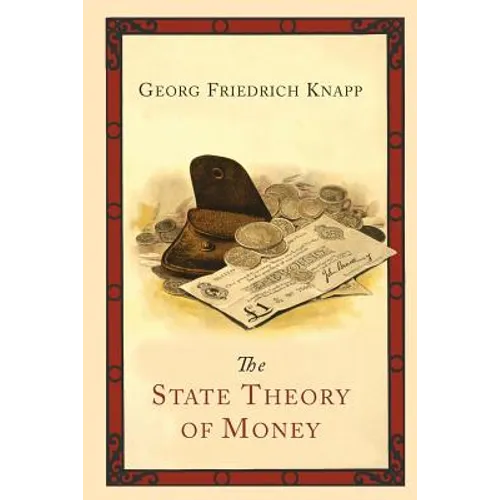
The State Theory of Money - Paperback

$26.26 USD
$26.26 USD
Sale Sold out
Shipping calculated at checkout.
In stock (100 units), ready to be shipped

Available Offers

Fast delivery available on most orders

Multiple secure payment options accepted

Secure checkout with
  • American Express
  • Apple Pay
  • Diners Club
  • Discover
  • Google Pay
  • Mastercard
  • PayPal
  • Shop Pay
  • Visa

Flight Range: Up to 1,000 meters (3,280 feet)

Maximum Speed: 45 kilometers per hour (28 miles per hour)

For all orders exceeding a value of 100USD shipping is offered for free.

Returns will be accepted for up to 10 days of Customer’s receipt or tracking number on unworn items. You, as a Customer, are obliged to inform us via email before you return the item.

Otherwise, standard shipping charges apply. Check out our delivery Terms & Conditions for more details.

View Product Details
Shopping cart
Product Product subtotal Quantity Price Product subtotal
The State Theory of Money - Paperback
$26.26/ea
$0.00
$26.26/ea $0.00

Product Description

by Georg Friedrich Knapp (Author), H. M. Lucas (Translator), James Bonar (Abridged by)

2013 Reprint of 1924 Edition. Full facsimile of the original edition, not reproduced with Optical Recognition Software. Georg Friedrich Knapp (1842-1926) was a German economist who in 1895 published "The State Theory of Money," which founded the chartalist school of monetary theory, which takes the statist stance that money must have no intrinsic value and strictly be used as governmentally-issued token, i.e., fiat money. Published originally in 1905, it created a stir among academics and policy makers, with proponents and critics both arguing forcefully about it. It was written at a time when monetary matters were in a great flux. Throughout the world, countries debated the optimal metallic standard for their monetary systems. Should it be silver, gold, both in a fixed relation (bimetallism), a combination of the two (symmetalism), or should the selection of the standard be left to the market? Knapp put the debate on new ground by suggesting that there need not be a metallic standard at all. Ideas about the desirability of paper money not backed by gold or other metals had been presented before but were never able to command academic respectability.

Number of Pages: 326
Dimensions: 0.73 x 9 x 6 IN
Illustrated: Yes
Publication Date: October 01, 2013
you might like