Product Description
by Jonathan Goldberg (Author)
The title of this book translates one of the many ways in which Lucretius names the basic matter from which the world is made in De rerum natura. In Lucretius, and in the strain of thought followed in this study, matter is always in motion, always differing from itself and yet always also made of the same stuff. From the pious Lucy Hutchinson's all but complete translation of the Roman epic poem to Margaret Cavendish's repudiation of atomism (but not of its fundamental problematic of sameness and difference), a central concern of this book ishow a thoroughgoing materialism can be read alongside other strains in the thought of the early modern period, particularly Christianity.A chapter moves from Milton's monism to his angels and their insistent corporeality. Milton's angels have sex, and, throughout, this study emphasizes the consequences for thinking about sexuality offered by Lucretian materialism. Sameness of matter is not simply a question of same-sex sex, and the relations
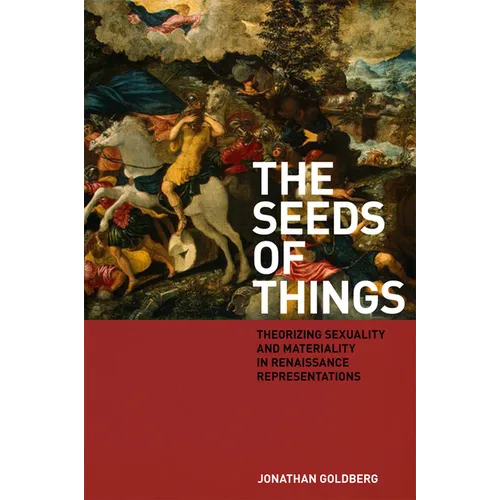
of atoms in Cavendish and Hutchinson are replicated in the terms in which they imagine marriages of partners who are also their doubles. Likewise, Spenser's knights in the 1590 Faerie Queene pursue the virtues of Holiness, Temperance, and Chastity in quests that take the reader on a path of askesis of the kind that Lucretiusrecommends and that Foucault studied in the final volumes of his history of sexuality.Although English literature is the book's main concern, it first contemplates relations between Lucretian matter and Pauline flesh by way of Tintoretto's painting The Conversion of St. Paul. Theoretical issues raised in the work of Agamben and Badiou, among others, lead to a chapter that takes up the role that Lucretius has played in theory, from Bergson and Marx to Foucault and Deleuze.This study should be of concern to students of religion, philosophy, gender, and sexuality, especially as they impinge on questions of representation.
Author Biography
JONATHAN GOLD BERG is Arts and Sciences Distinguished Professor in the Department of English and Director, Studies in Sexualities, at Emory University. The most recent of his many books is The Seeds of Things (Fordham).