Skip to content
Save 5% on your next order with code PREMIUM5!
100,000+ Products for Home, Medical, Office & Classroom Needs
Search
Skip to product information
1 of 1

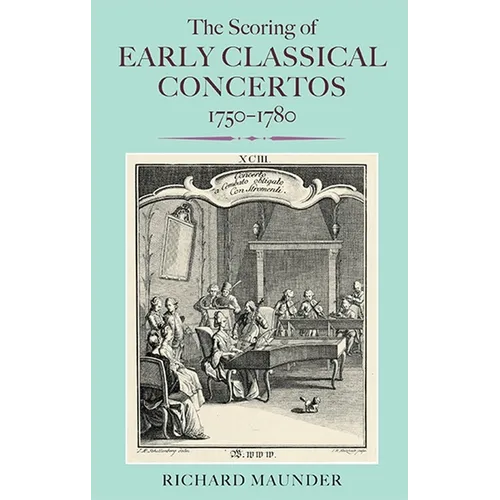
The Scoring of Early Classical Concertos, 1750-1780 - Hardcover

$145.35 USD
$145.35 USD
Sale Sold out
Shipping calculated at checkout.
In stock (100 units), ready to be shipped

Available Offers

Fast delivery available on most orders

Multiple secure payment options accepted

Secure checkout with
  • American Express
  • Apple Pay
  • Diners Club
  • Discover
  • Google Pay
  • Mastercard
  • PayPal
  • Shop Pay
  • Visa

Flight Range: Up to 1,000 meters (3,280 feet)

Maximum Speed: 45 kilometers per hour (28 miles per hour)

For all orders exceeding a value of 100USD shipping is offered for free.

Returns will be accepted for up to 10 days of Customer’s receipt or tracking number on unworn items. You, as a Customer, are obliged to inform us via email before you return the item.

Otherwise, standard shipping charges apply. Check out our delivery Terms & Conditions for more details.

View Product Details
Shopping cart
Product Product subtotal Quantity Price Product subtotal
The Scoring of Early Classical Concertos, 1750-1780 - Hardcover
$145.35/ea
$0.00
$145.35/ea $0.00

Product Description

by Richard Maunder (Author)

In the baroque era most concertos were - in the modern sense of the term - chamber music, to be played by a small group of musicians each reading from an individual printed or manuscript part. Indeed, composers often expected the soloist to be accompanied by just a string quartet with a harpsichord or organ continuo. But over the thirty years from 1750, as the classical style was being developed, numbers began to rise slowly. This did not happen at a uniform rate throughout Europe, however, for many concertos continued to be played one-to-a-part, and even by 1780 an ensemble with more than eight or nine strings would have been unusual. The nineteenth-century notion that a concerto pitted a lone soloist against a full symphony orchestra still lay some years in the future. At the same time ideas about form were changing, as the Vivaldian ritornello pattern metamorphosed into the concerto-sonata form used by Mozart and his contemporaries; some unconventional variants appeared as composers strove to keep abreast of latest developments. It was a fascinating period of innovation, in which many hundreds of concertos were written. To be sure, not all of them can be described as 'forgotten masterpieces', but among them there are some very fine works that certainly ought to be revived. It is hoped that readers of this book may be encouraged to explore this comparatively neglected repertoire.


Number of Pages: 304
Dimensions: 0.75 x 9.21 x 6.14 IN
Publication Date: March 20, 2014
you might like
