Skip to content
Welcome To Our Store.
100,000+ Products for Home, Medical, Office & Classroom Needs
Search
Skip to product information
1 of 1

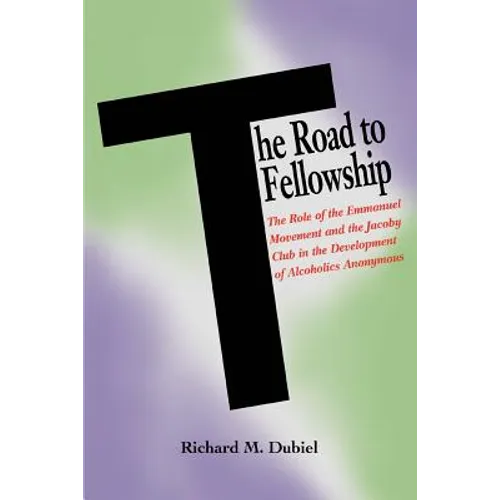
The Road to Fellowship: The Role of the Emmanuel Movement and the Jacoby Club in the Development of Alcoholics Anonymous - Paperback

$19.39 USD
$19.39 USD
Sale Sold out
Shipping calculated at checkout.
In stock (100 units), ready to be shipped

Available Offers

Fast delivery available on most orders

Multiple secure payment options accepted

Secure checkout with
  • American Express
  • Apple Pay
  • Diners Club
  • Discover
  • Google Pay
  • Mastercard
  • PayPal
  • Shop Pay
  • Visa

Flight Range: Up to 1,000 meters (3,280 feet)

Maximum Speed: 45 kilometers per hour (28 miles per hour)

For all orders exceeding a value of 100USD shipping is offered for free.

Returns will be accepted for up to 10 days of Customer’s receipt or tracking number on unworn items. You, as a Customer, are obliged to inform us via email before you return the item.

Otherwise, standard shipping charges apply. Check out our delivery Terms & Conditions for more details.

View Product Details
Shopping cart
Product Product subtotal Quantity Price Product subtotal
The Road to Fellowship: The Role of the Emmanuel Movement and the Jacoby Club in the Development of Alcoholics Anonymous - Paperback
$19.39/ea
$0.00
$19.39/ea $0.00

Product Description

by Richard M. Dubiel (Author)

The Emmanuel Movement and the Jacoby Club, founded in Boston in 1906 and 1909, were enormously popular movements, which had thirty years of impressive success in treating alcoholics. Like Alcoholics Anonymous, they were also based on fellowship among recovering alcoholics and involved a synthesis between lay psychological counseling and spirituality. Professor Dubiel shows us the many dimensions of that fascinating world of early twentieth century thought, which supplied such an important part of the cultural seedbed out of which the founders of A.A. gathered their ideas.

He also traces the indirect influence of the Emmanuel Movement on early A.A. through Rowland Hazard III and Richard R. Peabody, and the more direct influence of the Jacoby Club through early Boston A.A., which began in 1940 in the Jacoby Club quarters at 159 Newbury Street and was originally linked to them rather than the Oxford Group. The influence of this Boston-style A.A. was subsequently passed on to the rest of the United States through the second most published A.A. author, Richmond Walker and his Twenty-Four Hours a Day book.


Number of Pages: 212
Dimensions: 0.48 x 9 x 6 IN
Publication Date: January 29, 2004
you might like
