Product Description
by Charles River (Author)
*Includes pictures
*Includes ancient accounts
*Includes online resources and a bibliography for further reading
"So the church has been made a spectacle of great beauty, stupendous to those who see it and altogether incredible to those who hear of it...Its breadth and length have been so fittingly proportioned that it may without impropriety be described as being both very long and extremely broad. And it boasts of an ineffable beauty, for it subtly combines its mass with the harmony of its proportions, having neither any excess nor any deficiency, inasmuch as it is more pompous than ordinary buildings] and considerably more decorous than those which are huge beyond measure; and it abounds exceedingly in gleaming sunlight. You might say that the interior] space is not illuminated by the sun from the outside, but that the radiance is generated within, so great an abundance of light bathes this shrine all round." - Procopius's description of the Hagia Sophia in Constantinople
It would be hard if not outright impossible to overstate the impact Roman Emperor Constantine I had on the history of Christianity, Ancient Rome, and Europe as a whole. Best known as Constantine the Great, the kind of moniker only earned by rulers who have distinguished themselves in battle and conquest, Constantine remains an influential and controversial figure to this day. He achieved enduring fame by being the first Roman emperor to personally convert to Christianity, and for his notorious Edict of Milan, the imperial decree which legalized the worship of Christ and promoted religious freedom throughout the Empire. More than 1500 years after Constantine's death, Abdu'l-Bah , the head of the Bah ' Faith, wrote, "His blessed name shines out across the dawn of history like the morning star, and his rank and fame among the world's noblest and most highly civilized is still on the tongues of Christians of all denominations"
Moreover, even though he is best remembered for his religious reforms and what his (mostly Christian) admirers described as his spiritual enlightenment, Constantine was also an able and effective ruler in his own right. Rising to power in a period of decline and confusion for the Roman Empire, he gave it a new and unexpected lease on life by repelling the repeated invasions of the Germanic tribes on the Northern and Eastern borders of the Roman domains, even going so far as to re-expand the frontier into parts of Trajan's old conquest of Dacia (modern Romania), which had been abandoned as strategically untenable.
However, it can be argued that despite his military successes - the most notable of which occurred fighting for supremacy against other Romans - Constantine may well have set the stage for the ultimate collapse of the Roman Empire as it had existed up until that point. It was Constantine who first decided that Rome, exposed and vulnerable near the gathering masses of barbarians moving into Germania and Gaul, was a strategically unsafe base for the Empire, and thus expanded the city of New Rome on the Dardanelles straits, creating what eventually became Constantinople. By moving the political, administrative and military capital of the Empire from Rome to the East, as well as the Imperial court with all its attendant followers, Constantine laid the groundwork for the eventual schism which saw the two parts of the Roman Empire become two entirely separate entities, go their own way, and eventually collapse piecemeal under repeated waves of invasion.
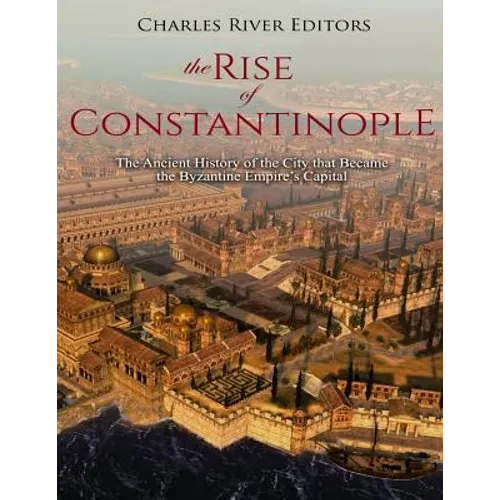
The Rise of Constantinople: The Ancient History of the City that Became the Byzantine Empire's Capital looks at the events that brought about the transformation of Byzantium, and how Constantinople became one of the most important cities in the world. Along with pictures depicting important people, places, and events, you will learn about the rise of Constantinople like never before.