Skip to content
Welcome To Our Store.
100,000+ Products for Home, Medical, Office & Classroom Needs
Search
Skip to product information
1 of 1

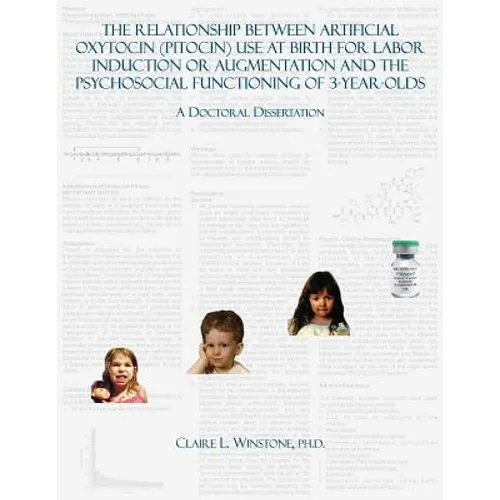
The Relationship Between Artificial Oxytocin (Pitocin) Use At Birth For Labor Induction Or Augmentation And The Psychosocial Functioning Of 3-Year-Old - Paperback

$20.18 USD
$20.18 USD
Sale Sold out
Shipping calculated at checkout.
In stock (100 units), ready to be shipped

Available Offers

Fastest Delivery Tomorrow With Vip DealOrder within 1 hr 8 mins.

Instant 10% Discount On HDFC Banks Credit/Debit Cards EMI and CreditCard

Secure checkout with
  • American Express
  • Apple Pay
  • Diners Club
  • Discover
  • Google Pay
  • Mastercard
  • PayPal
  • Shop Pay
  • Visa

Flight Range: Up to 1,000 meters (3,280 feet)

Maximum Speed: 45 kilometers per hour (28 miles per hour)

For all orders exceeding a value of 100USD shipping is offered for free.

Returns will be accepted for up to 10 days of Customer’s receipt or tracking number on unworn items. You, as a Customer, are obliged to inform us via email before you return the item.

Otherwise, standard shipping charges apply. Check out our delivery Terms & Conditions for more details.

View Product Details
Shopping cart
Product Product subtotal Quantity Price Product subtotal
The Relationship Between Artificial Oxytocin (Pitocin) Use At Birth For Labor Induction Or Augmentation And The Psychosocial Functioning Of 3-Year-Old - Paperback
$20.18/ea
$0.00
$20.18/ea $0.00

Product Description

by Claire Winstone (Author)

This is the complete text of the author's doctoral dissertation. The use of artificial oxytocin (Pitocin) at birth to initiate or augment labor has become commonplace in a vast number of American hospitals, where 99% of women give birth, with around two-thirds of inductions now being for non-medical reasons, yet little research to date has explored the possibility of enduring effects of such an intervention on children born with the use of this medication. This study attempted to answer the question, "What is the relationship between the use of artificial oxytocin at birth and the psychosocial functioning of the children at age 3?" It was hypothesized that artificial oxytocin use at birth contributes to an enduring imprint, revealed in the psychosocial functioning of young children. The sample comprised 514 mothers of vaginally-born 3-year-olds who were exposed (N = 231) or not exposed (N = 267) to artificial oxytocin at birth. Mothers responded to an online self-report survey about the hospital birth of these children, their development, and their current psychosocial functioning. Responses from mothers who received Pitocin at birth were compared to those of mothers who gave birth without Pitocin. The findings, analyses, and their interpretations are described and discussed, together with implications for parents and their children, and for research and future obstetrical practice.


Number of Pages: 230
Dimensions: 0.48 x 11.02 x 8.5 IN
Publication Date: October 15, 2015
you might like
