Product Description
by Robert Tressell (Author)
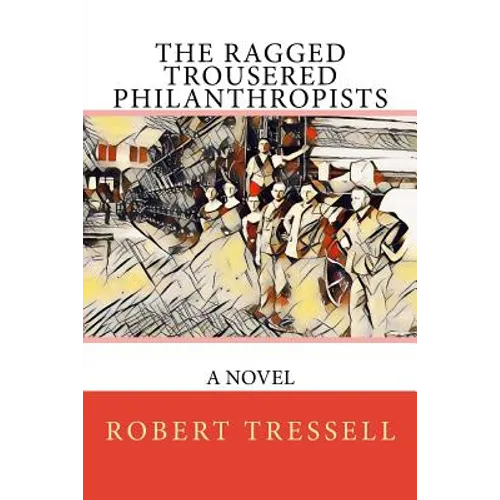
The Ragged-Trousered Philanthropists is a novel by Robert Tressell first published in 1914 after his death in 1911. An explicitly political work, it is widely regarded as a classic of working-class literature. It was placed seventy-second in the 2003 The Big Read survey conducted by the BBC. The book provides a comprehensive picture of social, political, economic and cultural life in Britain at a time when socialism was beginning to gain ground. It was around that time that the Labour Party was founded and began to win seats in the House of Commons. The book advocates a socialist society in which work is performed to satisfy the needs of all rather than to generate profit for a few. A key chapter is "The Great Money Trick", in which Owen organises a mock-up of capitalism with his workmates, using slices of bread as raw materials and knives as machinery. Owen 'employs' his workmates cutting up the bread to illustrate that the employer - who does not work - generates personal wealth whilst the workers effectively remain no better off than when they began, endlessly swapping coins back and forth for food and wages. This is Tressell's practical way of illustrating the Marxist theory of surplus value, which in the capitalist system is generated by labour. The house that is under renovation in the book, referred to frequently as the 'job', is known by the workmen as 'The Cave'. Given the author's interest in the philosophy of Plato, it is highly likely that this is a reference to Plato's "Allegory of the Cave". A major recurring theme in Tressell's book highlights the inability and reluctance of the workers to comprehend, or even consider, an alternative economic system other than free market capitalism]. The author attributes this inability, amongst other things, to the fact that they have never experienced an alternative system, and have been raised as children to unquestioningly accept the status quo, regardless of it being potentially inimical to their own interests. In Plato's work, the underlying narrative suggests that in the absence of an alternative, human beings will accept and submit to their present condition and consider it to be 'normal', no matter how contrived the circumstances. Owen sets out his essential creed in the first chapter: '... What we call civilisation - the accumulation of knowledge which has come down to us from our forefathers - is the fruit of thousands of years of human thought and toil. It is not the result of the labour of the ancestors of any separate class of people who exist today, and therefore it is by right the common heritage of all. Every little child that is born into the world, no matter whether he is clever or dull, whether he is physically perfect or lame, or blind; no matter how much he may excel or fall short of his fellows in other respects, in one thing at least he is their equal - he is one of the heirs of all the ages that have gone before.