Product Description
by Jeremy F. Taylor (Author), Marilyn Taylor (Author)
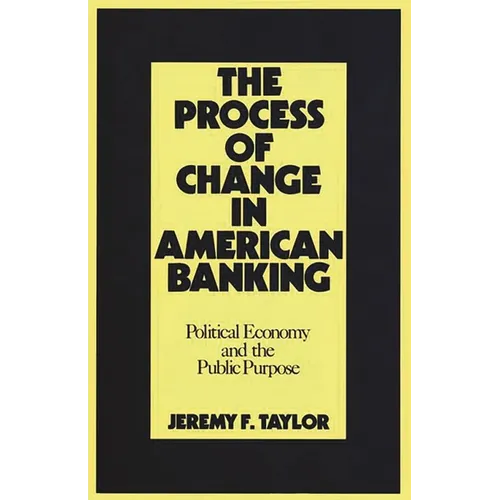
In this volume, Jeremy Taylor focuses on the recent changes in the U.S. banking system, analyzing the underlying reasons for these changes and proposing solutions to problems currently faced by the industry. Arguing that the banking industry is the medium through which pressures are transmitted from one part of the economy to another, Taylor shows that public lack of confidence in banking--brought on by crises such as the bailout of the savings and loan industry--can translate into a serious lack of confidence in the economy as a whole. He fully examines the current banking crisis against the background of historical changes in U.S. banking, demonstrating that banking change in this country is most often crisis driven--due primarily to the failure of the legislature and the government to solve major problems before they become major crises. The considerable influence of politics on the U.S. banking system is also explored in depth.
Divided into three parts, the book begins by examining the process of change in American banking. Taylor explores the role and significance of change in banking, offers a historical overview of the five major banking crises that have occurred since 1779, and discusses the theory of banking change. In the second section, the author looks at the problems caused by banking change. Particular attention is given to the present banking crisis and the insolvency of southern savings and loan institutions. Finally, Taylor addresses possible solutions to the problems of banking change. Before offering his own proposals, he demonstrates the relevance of Alexander Hamilton's ideas on banking to the present-day situation and compares the U.S. banking system with other major international banking centers. He concludes by calling for the creation of a new financial instrument that would allow investors to share in the ownership of bank loans, for amending the Glass-Steagal Act, and for the creation of debt-reduction summits for the m jor debtor nations of the Third World. Students of banking, policymakers, and banking executives will find Taylor an important new voice in debates about the causes of and solutions to the current banking crisis.Author Biography
JEREMY F. TAYLOR is strategic planning officer at Key Bank of Central New York, Syracuse. His previous book, The Banking System in Troubled Times, was also published by Quorum Books.