Product Description
by Daniel Bishop (Author)
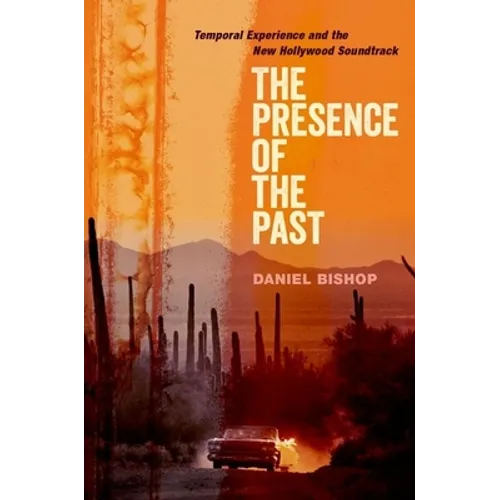
The Presence of the Past offers a new perspective on Hollywood's "New Wave" as engaged with the vitality of sensory experience and the affective imagination. As author Daniel Bishop shows, the soundtracks of several key films of the New Hollywood Cinema of the late 1960s and 70s cultivated an array of sensibilities regarding the American past. This importance of the past exceeded the New Hollywood's acknowledged use of genre revisionism as a vehicle for timely ideological commentary. There was also a vital tendency in this era to locate the past as an object of imagined phenomenal presence.
Although this concept of the past never solidified into a self-conscious discourse, it was nevertheless woven into film culture, readable between the lines of criticism, cultural reception, New Wave aesthetics, and in the aesthetic and industrial transformations of sound design and film music. Bonnie and Clyde (1967), Butch Cassidy and the Sundance Kid (1969), McCabe and Mrs. Miller (1971), The Last Picture Show (1971), American Graffiti (1973), Chinatown (1974), and Badlands (1973) are not only key texts of an exciting era in American popular cinema. They are also mediations upon the presence of the past, an image central to the polarities of visceral energy and ambiguous ephemerality, of utopian dreams and melancholy resignation that characterized this cinema. These sensibilities of pastness engage in diverse ways with myth, nostalgia, paranoia, and existential alienation. They are, however, also united by a concern both with the experiential actuality of the past and with thedistances that inevitably separate us from this actuality.
Author Biography
Daniel Bishop is an adjunct assistant professor at the Jacobs School of Music at Indiana University, where he teaches in the Music in General Studies program and the Musicology department. His teaching and research focus on film music and sound.