Skip to content
Welcome To Our Store.
100,000+ Products for Home, Medical, Office & Classroom Needs
Search
Skip to product information
1 of 1

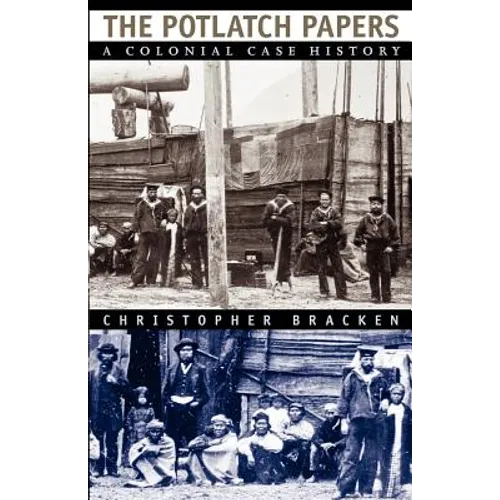
The Potlatch Papers: A Colonial Case History - Paperback

$72.00 USD
$72.00 USD
Sale Sold out
Shipping calculated at checkout.
In stock (100 units), ready to be shipped

Available Offers

Fast delivery available on most orders

Multiple secure payment options accepted

Secure checkout with
  • American Express
  • Apple Pay
  • Diners Club
  • Discover
  • Google Pay
  • Mastercard
  • PayPal
  • Shop Pay
  • Visa

Flight Range: Up to 1,000 meters (3,280 feet)

Maximum Speed: 45 kilometers per hour (28 miles per hour)

For all orders exceeding a value of 100USD shipping is offered for free.

Returns will be accepted for up to 10 days of Customer’s receipt or tracking number on unworn items. You, as a Customer, are obliged to inform us via email before you return the item.

Otherwise, standard shipping charges apply. Check out our delivery Terms & Conditions for more details.

View Product Details
Shopping cart
Product Product subtotal Quantity Price Product subtotal
The Potlatch Papers: A Colonial Case History - Paperback
$72.00/ea
$0.00
$72.00/ea $0.00

Product Description

by Christopher Bracken (Author)

Variously described as an exchange of gifts, a destruction of property, a system of banking, and a struggle for prestige, the potlatch is one of the founding concepts of anthropology. Some researchers even claim to have discovered traces of the potlatch in all the economies of the world.

However, as Christopher Bracken shows in this elegantly argued work, the potlatch was in fact invented by the nineteenth-century Canadian law that sought to destroy it. In addition to giving the world its own potlatch, the law also generated a random collection of "potlatch papers" dating from the 1860s to the 1930s. Bracken meticulously analyzes these documents--some canonical, like Franz Boas's ethnographies, others unpublished and little known--to catch a colonialist discourse in the act of constructing fictions about certain First Nations and then deploying those fictions against them. Rather than referring to objects that already exist, the "potlatch papers" instead gave themselves something to refer to; a mirror in which to observe not "the Indian," but "the European."
Number of Pages: 283
Dimensions: 0.75 x 8.5 x 5.56 IN
Illustrated: Yes
Publication Date: December 08, 1997
you might like

