Product Description
by Jesse Harasta (Author), Charles River (Author)
*Includes pictures
*Includes excerpts of the Popol Vuh
*Includes online resources and a bibliography for further reading
Many ancient civilizations have influenced and inspired people in the 21st century. The Greeks and Romans continue to fascinate the West today. But of all the world's civilizations, none have intrigued people more than the Mayans, whose culture, astronomy, language, and mysterious disappearance all continue to captivate people. In 2012 especially, there was a renewed focus on the Mayans, whose advanced calendar led many to speculate the world would end on the same date the Mayan calendar ends. The focus on the "doomsday" scenario, however, overshadowed the Mayans' true contribution to astronomy, language, sports, and art.
Unlike most of the world's sacred books - the Quran, the Bible or the I-Ching for example - nobody knows the universal name, if there ever was one, for the Maya's collection of myths. Instead, the title that has been passed down, the "Popol Vuh," appears to be the specific title given to a particular copy of these tales. Its meaning, roughly translated as the Council Book, refers to the special role of this text: it was the shared property of the council of lords that ruled the Quich kingdom and was apparently regularly consulted by that body for advice to guide their rule.
However, in the opening sections, the scribes who penned the text also give it several other names, including "the Light That Came from Beside the Sea," "Our Place in the Shadows" and "The Dawn of Life" (pg 63). All of these names were originally in K'ichean Maya, the language spoken by the Maya of the Quich Kingdom and its neighboring regions. The first of these names refers to a pilgrimage by the second generation of Quich lords in Part V to the Yucatan coast to acquire a copy of at least a portion of the original text. The second refers to Part IV, the period before the first Dawn (the "Shadows") when the ancestral Quich earned their particular right to rule. The final name refers to Part I, when the first gods created all of the various parts of life. This multiplicity of names and titles for sacred works is not uncommon, and perhaps comparable to the Bible being referred to as "the Good Book" or (in reference to the New Testament) "the Good News" or the "Gospel."
The name Popol Vuh is itself controversial as the original text actually spells the name three different ways: "Popol Vuh", of course, but also "Pop Wuj" and "Popol Wuj." In general, the most correct form in contemporary Quiche spelling is probably "Popol Wuj", but as the text is best known in English with the word "Vuh", this convention will be maintained here (Eenriik 2014).
There are a number of translations and editions of the Popol Vuh, which vary considerably in quality. Many early editions were not informed by the latest scholarship in Maya linguistics and sometimes the ways they translate names in particular can vary. This text will use the Second Edition (1996), translated by Dennis Tedlock and published by Simon and Schuster, for all of its quotations and page citations.
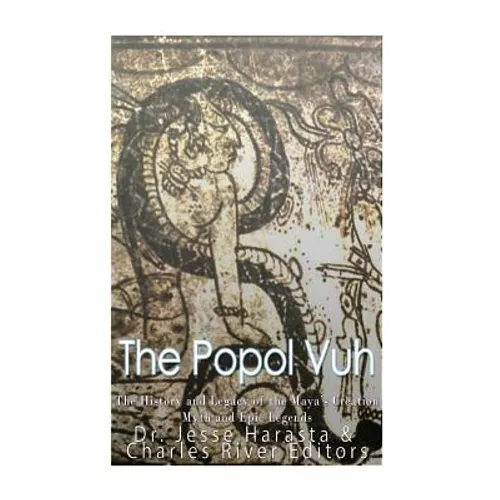
The Popol Vuh: The History and Legacy of the Maya's Creation Myth and Epic Legends examines what's contained within and how the Popol Vuh survived to the present day. Along with pictures depicting important people, places, and events, you will learn about the Popol Vuh like never before.