Skip to content
Welcome To Our Store.
100,000+ Products for Home, Medical, Office & Classroom Needs
Search
Skip to product information
1 of 2

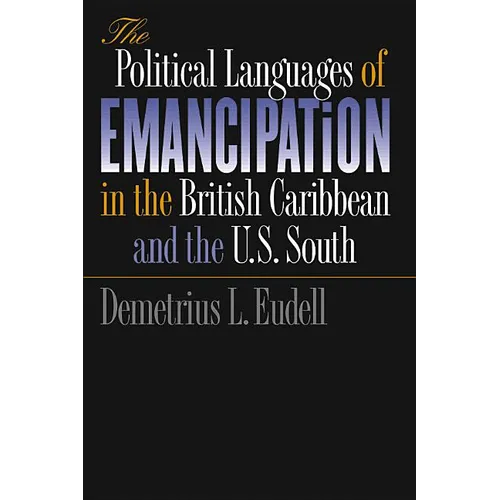
The Political Languages of Emancipation in the British Caribbean and the U.S. South - Paperback

$68.85 USD
$68.85 USD
Sale Sold out
Shipping calculated at checkout.
In stock (100 units), ready to be shipped

Available Offers

Fast delivery available on most orders

Multiple secure payment options accepted

Secure checkout with
  • American Express
  • Apple Pay
  • Diners Club
  • Discover
  • Google Pay
  • Mastercard
  • PayPal
  • Shop Pay
  • Visa

Flight Range: Up to 1,000 meters (3,280 feet)

Maximum Speed: 45 kilometers per hour (28 miles per hour)

For all orders exceeding a value of 100USD shipping is offered for free.

Returns will be accepted for up to 10 days of Customer’s receipt or tracking number on unworn items. You, as a Customer, are obliged to inform us via email before you return the item.

Otherwise, standard shipping charges apply. Check out our delivery Terms & Conditions for more details.

View Product Details
Shopping cart
Product Product subtotal Quantity Price Product subtotal
The Political Languages of Emancipation in the British Caribbean and the U.S. South - Paperback
$68.85/ea
$0.00
$68.85/ea $0.00

Product Description

by Demetrius L. Eudell (Author)

This comparative study examines the emancipation process in the British Caribbean, particularly Jamaica, during the 1830s and in the United States, particularly South Carolina, during the 1860s. Analyzing the intellectual and ideological foundations of postslavery Anglo-America, Demetrius Eudell explores how former slaves, former slaveholders, and their societies' central governments understood and discussed slavery, emancipation, and the transition between the two.

Eudell investigates the public policies -- which addressed issues of labor control, access to land, and the general social behaviors of former slaves -- used to execute emancipation. In both regions, government-appointed officials (special magistrates in Jamaica and agents of the Freedmen's Bureau in South Carolina) were crucial in implementing these policies. While many former slaves were fighting for the right to be paid for their labor and to own land, many officials came to view their role as part of a new civilizing mission whose goal was to eradicate the psychic damage supposedly caused by slavery.

Eudell concludes by examining the 1865 Morant Bay rebellion in Jamaica and the retreat from Reconstruction in South Carolina, part of the larger movement of Redemption that occurred in 1877. Both of these occurrences represented the incomplete victory of emancipation, Eudell argues, and should provoke scholarly questions regarding the persistent thesis of U.S. exceptionalism.


Number of Pages: 248
Dimensions: 0.61 x 9.04 x 6.12 IN
Publication Date: March 25, 2002
you might like
