


Product Description
by Doug Brugge (Editor), Esther Yazzie-Lewis (Editor), Timothy Benally (Editor)
The Navajo Nation covers a vast stretch of northeastern Arizona and parts of New Mexico and Utah. The area is also home to more than one thousand abandoned uranium mines and four former uranium mills, a legacy of the U.S. nuclear program.
In the early 1940s the Navajo Nation was in the early stages of economic development, recovering from the devastating stock reduction period of 1930. Navajo men sought work away from the reservation on railroads and farm work in Phoenix and California. Then came the nuclear age and uranium was discovered on the reservation. Work became available and young Navajo men grabbed the jobs in the uranium mines.
The federal government and the mining companies knew of the hazards of uranium mining; however, the miners were never informed. They had to find out about the danger on their own. When they went to western doctors, they were diagnosed with lung cancer and were simply told they were dying.
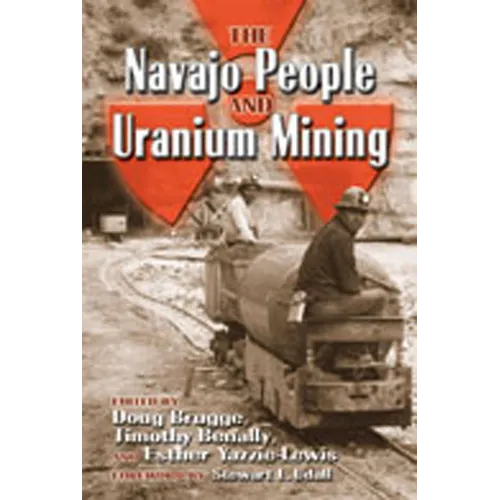
A team of Navajo people and supportive whites began the Navajo Uranium Miner Oral History and Photography Project from which this book arose. That project team, based at Tufts University School of Medicine in Boston, recruited the speakers who told their stories, which are reproduced here. There are also narrative chapters that assess the experiences of the Navajo people from diverse perspectives (history, psychology, culture, advocacy, and policy). While the points of view taken are similar, there is a range of perspectives as to what would constitute justice.
Author Biography
Doug Brugge is associate professor of community health at Tufts University School of Medicine, Boston.
Timothy Benally, a bilingual Navajo, is retired director of both the Office of Navajo Uranium Workers and the Uranium Education Center, Diné College, Shiprock, New Mexico. Esther Yazzie-Lewis is a bilingual Navajo and recently completed her master's degree in American studies at the University of New Mexico, Albuquerque.