Product Description
by Charles W. Steadman (Author)
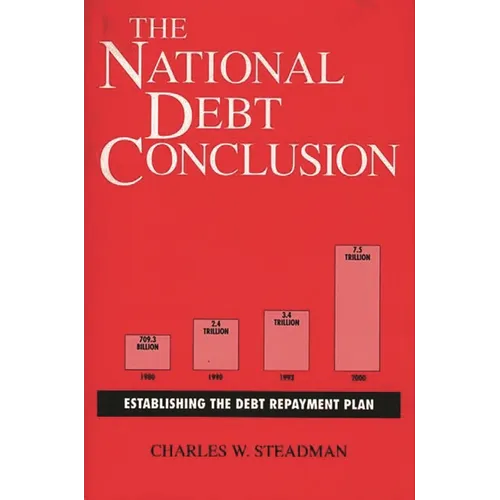
The Washington financier who first proposed creation of a trust fund to retire the national debt has written a book outlining a new plan that would prevent Congress from raiding the fund to supplement the cost of regular government programs. In 1982 he suggested a temporary 5% tax on manufacturers sales. The income would go into a debt trust fund similar to the highway trust fund. The $1 trillion federal debt would have been retired in five years (by 1985 or 1986) under that proposal. In the past decade, however, federal trust fund have not fared as well. For example, contributions to the social security fund essentially are borrowed for the regular budget. The trust fund contains federal I.O.U.s. A special tax that raised secure funds exclusively for debt retirement might well get public support. Without federal interest payments, the 1992 federal deficit would have been cut to $114 billion from $314 billion.
Washington banker and attorney Charles W. Steadman, who made the 1982 proposal, now has eliminated the trust fund from his method of paying off the debt. In The National Debt Conclusion: Establishing the Debt Repayment Plan, (Praeger Publishers, November 1993), Steadman lays out his proposal to eliminate the debt in ten years. Steadman would issue new debt bonds for existing federal government debt securities in a single exchange. A sales tax at the producers' level would be dedicated solely to paying off the new debt bonds on schedule. There would be no trust fund. The rate of the sales tax would be scheduled to raise only enough money each year to call the bonds scheduled for retirement in that year. The debt bonds could be retired only by income from the special purpose tax. Steadman's plan establishes a contract between the government and the bondholders, who would have no claim on general funds of the United States. The Congress would have no way to borrow from the debt retirement receipts. Steadman argues that America must adopt a fundamentally different fiscal structure before the debt burden ultimately causes collapse of the nation's financial structure.Author Biography
CHARLES W. STEADMAN is an attorney and financier specializing in corporate finance, private banking, and capital investment./e He is chairman of Steadman Security Corporation, a private bank in Washington, D.C., and chairman of the National Debt Repayment Foundation, also in Washington.