


Product Description
by William Bernstein (Author)
Today we are suddenly living in a way that is very unusual for most of us. As we examine aspects of our lives that we might never have considered before, maybe we're thinking about the crucial need for money, and what that means.
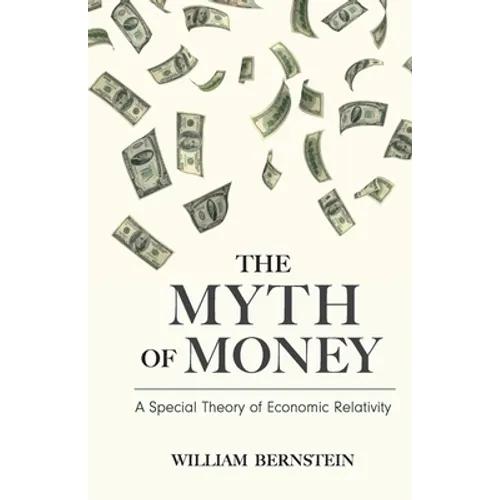
Which is real: people or money? Early humans began using objects to represent value, and a change came when an abstract entity called "money" began to represent certain value. A rock or gem is physical. Money is not. This treatise asks, "Is there a better way?" Note: If you think money is more important than people, this book might not be for you.We rely on a thing-money-that is as abstract as any human emotion. In this book we wonder whether we are now able to transcend the idea of basing so much on something that is so abstract that it is often represented by numbers in a computer software system somewhere.What is the difference between governments giving a billion dollars, a trillion dollars, or more? If money is created to represent the future value of productivity and services, do we need the extra step of using money as a representation of the value of food, housing, etc.? Maybe there's a better way. Note: There is another author who has written a great deal on economic issues, William J. Bernstein. If that's who you're looking for... wrong author.
Number of Pages: 144
Dimensions: 0.31 x 8.5 x 5.51 IN
Publication Date: April 17, 2020



