Skip to content
Welcome To Our Store.
100,000+ Products for Home, Medical, Office & Classroom Needs
Search
Skip to product information
1 of 1

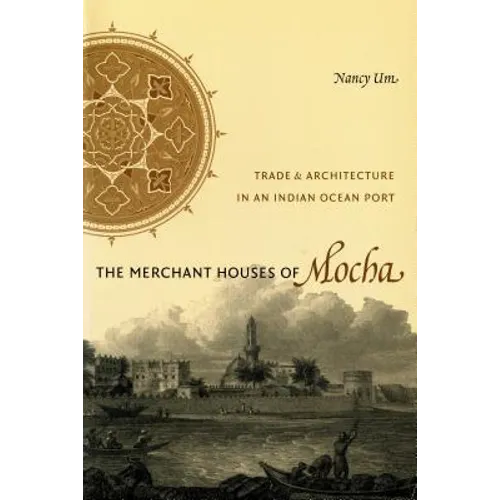
The Merchant Houses of Mocha: Trade and Architecture in an Indian Ocean Port - Paperback

$54.72 USD
$54.72 USD
Sale Sold out
Shipping calculated at checkout.
In stock (100 units), ready to be shipped

Available Offers

Fast delivery available on most orders

Multiple secure payment options accepted

Secure checkout with
  • American Express
  • Apple Pay
  • Diners Club
  • Discover
  • Google Pay
  • Mastercard
  • PayPal
  • Shop Pay
  • Visa

Flight Range: Up to 1,000 meters (3,280 feet)

Maximum Speed: 45 kilometers per hour (28 miles per hour)

For all orders exceeding a value of 100USD shipping is offered for free.

Returns will be accepted for up to 10 days of Customer’s receipt or tracking number on unworn items. You, as a Customer, are obliged to inform us via email before you return the item.

Otherwise, standard shipping charges apply. Check out our delivery Terms & Conditions for more details.

View Product Details
Shopping cart
Product Product subtotal Quantity Price Product subtotal
The Merchant Houses of Mocha: Trade and Architecture in an Indian Ocean Port - Paperback
$54.72/ea
$0.00
$54.72/ea $0.00

Product Description

by Nancy Um (Author)

Gaining prominence as a seaport under the Ottomans in the mid-1500s, the city of Mocha on the Red Sea coast of Yemen pulsed with maritime commerce. Its very name became synonymous with Yemen's most important revenue-producing crop -- coffee. After the imams of the Qasimi dynasty ousted the Ottomans in 1635, Mocha's trade turned eastward toward the Indian Ocean and coastal India. Merchants and shipowners from Asian, African, and European shores flocked to the city to trade in Arabian coffee and aromatics, Indian textiles, Asian spices, and silver from the New World.

Nancy Um tells how and why Mocha's urban shape and architecture took the forms they did. Mocha was a hub in a great trade network encompassing overseas cities, agricultural hinterlands, and inland market centers. All these connected places, together with the functional demands of commerce in the city, the social stratification of its residents, and the imam's desire for wealth, contributed to Mocha's architectural and urban form.

Eventually, in the mid-1800s, the Ottomans regained control over Yemen and abandoned Mocha as their coastal base. Its trade and its population diminished and its magnificent buildings began to crumble, until few traces are left of them today. This book helps bring Mocha to life once again.

Author Biography

Nancy Um is associate professor of art history at Binghamton University in New York.

Number of Pages: 272
Dimensions: 0.72 x 8.94 x 6 IN
Publication Date: September 01, 2009
you might like

