Skip to content
Welcome To Our Store.
100,000+ Products for Home, Medical, Office & Classroom Needs
Search
Skip to product information
1 of 1

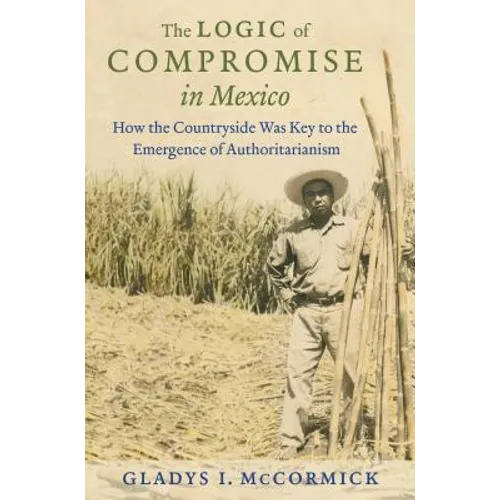
The Logic of Compromise in Mexico: How the Countryside Was Key to the Emergence of Authoritarianism - Paperback

$64.73 USD
$64.73 USD
Sale Sold out
Shipping calculated at checkout.
In stock (100 units), ready to be shipped

Available Offers

Fastest Delivery Tomorrow With Vip DealOrder within 1 hr 8 mins.

Instant 10% Discount On HDFC Banks Credit/Debit Cards EMI and CreditCard

Secure checkout with
  • American Express
  • Apple Pay
  • Diners Club
  • Discover
  • Google Pay
  • Mastercard
  • PayPal
  • Shop Pay
  • Visa
  • Daily deals
  • Return policy
  • Payment method
  • Help center 24/7

Flight Range: Up to 1,000 meters (3,280 feet)

Maximum Speed: 45 kilometers per hour (28 miles per hour)

For all orders exceeding a value of 100USD shipping is offered for free.

Returns will be accepted for up to 10 days of Customer’s receipt or tracking number on unworn items. You, as a Customer, are obliged to inform us via email before you return the item.

Otherwise, standard shipping charges apply. Check out our delivery Terms & Conditions for more details.

View Product Details
Shopping cart
Product Product subtotal Quantity Price Product subtotal
The Logic of Compromise in Mexico: How the Countryside Was Key to the Emergence of Authoritarianism - Paperback
$64.73/ea
$0.00
$64.73/ea $0.00

Product Description

by Gladys I. McCormick (Author)

In this political history of twentieth-century Mexico, Gladys McCormick argues that the key to understanding the immense power of the long-ruling Partido Revolucionario Institucional (PRI) is to be found in the countryside. Using newly available sources, including declassified secret police files and oral histories, McCormick looks at large-scale sugar cooperatives in Morelos and Puebla, two major agricultural regions that serve as microcosms of events across the nation. She argues that Mexico's rural peoples, despite shouldering much of the financial burden of modernization policies, formed the PRI regime's most fervent base of support.

McCormick demonstrates how the PRI exploited this support, using key parts of the countryside to test and refine instruments of control--including the regulation of protest, manipulation of collective memories of rural communities, and selective application of violence against critics--that it later employed in other areas, both rural and urban. With three peasant leaders, brothers named Ruben, Porfirio, and Antonio Jaramillo, at the heart of her story, McCormick draws a capacious picture of peasant activism, disillusion, and compromise in state formation, revealing the basis for an enduring political culture dominated by the PRI. On a broader level, McCormick demonstrates the connections among modern state building in Latin America, the consolidation of new forms of authoritarian rule, and the deployment of violence on all sides.


Number of Pages: 300
Dimensions: 0.8 x 9.28 x 6.06 IN
Publication Date: April 11, 2016
you might like