Skip to content
Welcome To Our Store.
100,000+ Products for Home, Medical, Office & Classroom Needs
Search
Skip to product information
1 of 1

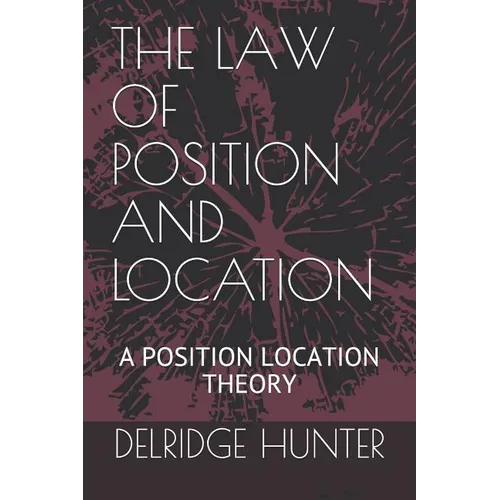
The Law of Position and Location: A Position Location Theory - Paperback

$13.48 USD
$13.48 USD
Sale Sold out
Shipping calculated at checkout.
In stock (100 units), ready to be shipped

Available Offers

Fast delivery available on most orders

Multiple secure payment options accepted

Secure checkout with
  • American Express
  • Apple Pay
  • Diners Club
  • Discover
  • Google Pay
  • Mastercard
  • PayPal
  • Shop Pay
  • Visa

Flight Range: Up to 1,000 meters (3,280 feet)

Maximum Speed: 45 kilometers per hour (28 miles per hour)

For all orders exceeding a value of 100USD shipping is offered for free.

Returns will be accepted for up to 10 days of Customer’s receipt or tracking number on unworn items. You, as a Customer, are obliged to inform us via email before you return the item.

Otherwise, standard shipping charges apply. Check out our delivery Terms & Conditions for more details.

View Product Details
Shopping cart
Product Product subtotal Quantity Price Product subtotal
The Law of Position and Location: A Position Location Theory - Paperback
$13.48/ea
$0.00
$13.48/ea $0.00

Product Description

by Delridge La Veon Hunter Ph. D. (Author)

The Law of Position & Location, a Position Location Theory, uses the premise of the Laws of Form as the basis of the numerous axioms that make up this paradigm. Each axiom contains a set of theorems that explain the rules of crossing, calling ((naming) and location (position) as operational forms within a polity of culture. Each axiom is layered to complement and support the others with axioms containing the rules that define distinction as an operational form of inequality. The two, operational processes here that explain the system are crossing and calling (naming). The position theory as a location theory, applies crossing and calling as indicators of the distance between the least favored and the most favored positions. The form of distinction as the original form establishes the motive for the creation of operational barriers to keep the other forms of distinction from crossing. To indicate what forms are to be distinguished from the original form, a name is to be attached to each form to inform that particular, what value is assigned to that name called. The name called and called again establishes that name as an indication of what form of distinction it is.


Number of Pages: 40
Dimensions: 0.1 x 9.02 x 5.98 IN
Publication Date: July 20, 2019
you might like
