Product Description
by Charles River (Author)
*Includes pictures
*Includes a bibliography for further reading
"I weary of writing more about these buildings, because it seems to me that I shall not be believed if I write more...I swear by God, in Whose power I am, that all I have written is the truth." - Francisco lvares
In the Lasta Mountains of northern Ethiopia, high on an arid plateau in the foothills, the settlement of Lalibela slumbered for centuries as little more than a pilgrimage site at the end of a long and weary footpath. The ancient trade routes between the Eritrean coast and the central highland redoubts that would later coalesce as the imperial capital of Addis Ababa passed fifty miles to the east of Lalibela, and from the early thirteenth century, after the passing of Gebre Mesqel Lalibela himself, the site slipped into decline. The focus of imperial government shifted south, under the influence of successive emperors, as the holy sites of Roha faded from the popular consciousness. Only the occasional band of pilgrims made the journey over the rugged mountain passes, and across the waterless high valleys to repose at the mythical site, now known only to a handful of faithful acolytes.
The site first came to European attention when it was visited in the early 16th century by the Portuguese explorer P ro da Covilh , who struck inland from Zeila on the Somali coast in a quest for the legendary Kingdom of Prester John. He was received by the Emperor Eskender, but he was effectively held a prisoner in Ethiopia for 30 years. During that time, he visited and briefly recorded his impressions of Lalibela.
Also in search of the Kingdom of Prester John was the Portuguese missionary Francisco lvares, who arrived in Ethiopia in 1515 as part of an ambassadorial mission authorized by the Portuguese King Manuel I. There, in the court of the Emperor Dawit II, he met numerous sundry Europeans, including P ro da Covilh , and Nicol Brancaleon, the Venetian painter who settled in Ethiopia in 1480 and whose artistic influence remains visible in ecclesiastical imagery all over the country.
It was Alvarez who described in detail the monuments of Lalibela in his exhaustive travelogue, A True Relation of the Lands of Prester John of the Indies. The explorer wrote, "At a day's journey from this church of Imbra Christo are edifices, the like of which and so many, cannot, as it appears to me, be found in the world. They are churches entirely excavated in the rock, very well hewn. The names of these churches are these: Emanuel, St. Saviour, St. Mary, Holy Cross, St. George, Golgotha, Bethlehem, Marcoreos, the Martyrs. The principal one is Lalibela. This Lalibela, they say, was a King in this same country for eighty years, and he was King before the one before mentioned who was named Abraham. This King ordered these edifices to be made. He does not lie in the church which bears his name, he lies in the church of Golgotha, which is the church of the fewest buildings here."
By the dawn of the 17th century, Portuguese influence in Africa fell into decline, and the occasions of European contact with Ethiopia became very few and far between. It would be another three centuries before another European would venture into the holy precincts of Lalibela as part of a British military expedition mounted in 1867. Thus, the "rediscovery" of the remarkable churches and the story of Christianity in Ethiopia would only be recently written.
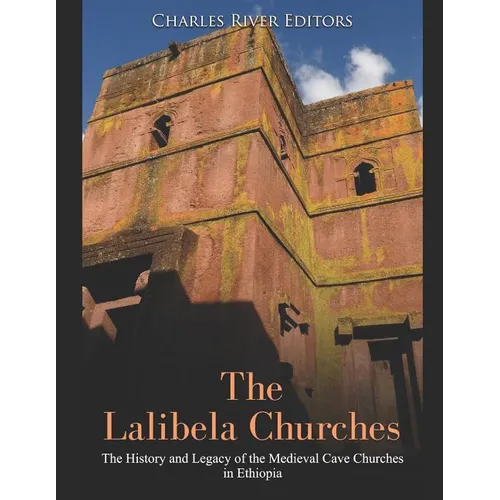
The Lalibela Churches: The History and Legacy of the Medieval Cave Churches in Ethiopia chronicles the remarkable construction and history of the churches. Along with pictures and a bibliography, you will learn about the Lalibela Churches like never before.