


Product Description
by Charles River (Author)
*Includes pictures
*Includes a bibliography for further reading
Despite British diplomatic efforts, Italy had joined the Axis in 1940 with the intention of expanding its African empire and reliving the glories of Ancient Rome. That proved to be a major mistake, and by the spring of 1943 Italy had lost all its African possessions. The Axis' North African defeat opened up the possibility of taking the war in the west to the European continent for the first time since France's lightning conquest by the Wehrmacht in 1940. The British and Americans debated the merits of landing in France directly in 1943, but they ultimately opted against it. The Soviets railed at the Westerners as "bastards of allies" - conveniently forgetting that they aided and abetted Hitler's violent expansionism in eastern Europe for over a year, starting in 1939 - but a 1943 "D-Day" style landing in France might have proven a strategic and logistical impossibility.
Complex reasons lay behind England's successful insistence on the Mediterranean theater rather than the French theater as the scene of the next western Allied strike against Nazi Germany. Chief among these remained Britain's determination to keep a postwar empire, one that Churchill and his cabinet hoped would include Iraq and Iran, the source of oil needed to ensure that England continued to "rule the waves" with a powerful modern navy. This strategic imperative, indeed, formed the backbone of the British choice of Sicily as the target for military operations in the summer of 1943.
The lackluster Allied showing on Sicily and the escape of most of the island's garrison encouraged Hitler to alter his plans and defend Italy vigorously. With its rugged mountain ridges, deep valleys, and numerous rivers, Italy contained tens of thousands of natural defensive positions. The Wehrmacht exploited these to the full during the ensuing campaign, bogging down the Anglo-American armies in an endless series of costly, time-consuming engagements. Even the rank and file German soldiers showed a clear awareness of the Italy's strategic significance: "'The Tommies will have to chew their way through us inch by inch, ' a German paratrooper wrote in an unfinished letter found on his corpse at Salerno, 'and we will surely make hard chewing for them.'" (Hastings, 2011, 408).
These events effectively divided Italians into three groups, and the country into two rival political entities. In the absence of clear orders, the first group was the Italian troops who simply melted away, and the many civilians who just kept their heads down and tried to survive. Meanwhile, those still loyal to fascism established the Repubblica Sociale Italiana (Italian Social Republic, RSI) with a capital at Salo. Mussolini had been imprisoned after his deposition, but the Germans sprang for him in a daring special forces operation. He was reinstated as Duce in the RSI, but very much under German control. At the same time, the Allies set up Victor Emmanuel and Badoglio as leaders of the Regno del Sud (Kingdom of the South, RS) with the support of anti-fascist parties and armed resistance groups. This contest of transnational ideologies took place amidst Italy's own historical and geographical divisions and inequalities, amidst immense destruction, and all under the watchful eye of a multinational occupying army led by Great Britain.
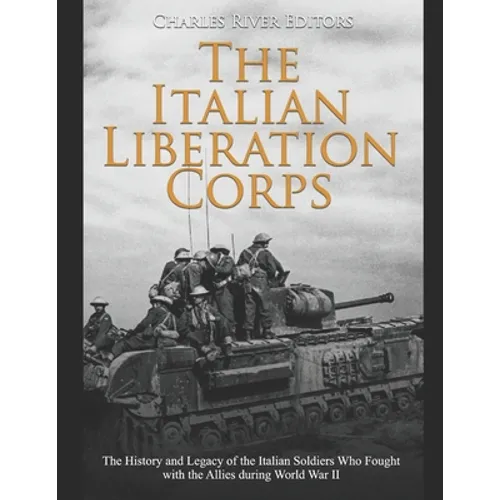
The Italian Liberation Corps: The History and Legacy of the Italian Soldiers Who Fought with the Allies during World War II examines how Italian soldiers joined the Allied forces during the fighting in Italy, and the events that followed. Along with pictures of important people, places, and events, you will learn about the Italian Liberation Corps like never before.



