


Product Description
by John Oxenham Goodman (Author)
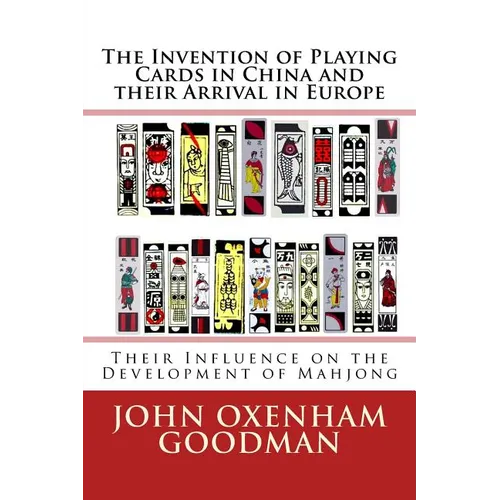
This book contains 37 coloured illustrations and takes us through the history of playing cards from their invention in China to their appearance in Europe in the 13th Century. It describes how the development of paper playing cards was made possible by the Chinese invention of paper in 105 AD and how wood block printing simplified the manufacture of cards. Then paper money was introduced in the 11th Century followed by the use of monetary denominations for the 4 suits of cards. There are colour illustrations of Ming Dynasty bank notes showing their similarity to early playing cards. Then we are taken to the 13th Century when Marco Polo and other Italian merchants travelled to China on the Silk Road and saw people playing card games. They took the new invention back to Europe but, because they could neither speak nor read Chinese well, they misinterpreted many of its features. Kings, queens, knights and pages appeared on European cards instead of the Chinese images of strings of coins and popular outlaws who rebelled against the government of the Northern Song Dynasty (960-1127). The Chinese idea of money cards largely disappeared in Europe with the suit of coins in Tarot and Italian cards being the sole survivor. Meanwhile in China one of the 4 suits was abandoned and solid blocks in the form of Mahjong tiles appeared in 1864, but the paper cards from which they were derived continue in use today. Colour pictures of early Chinese cards and bank notes as well as early Mahjong tiles are accompanied by explanations which help the reader understand the history of playing cards. Links of 16th Century Ma Diao cards to the Tarot suits and to the 5 Chinese and ancient Greek elements are shown in charts and tables. The Chinese names of the Major Arcana are also listed with astrological connections.



