


Product Description
by James A. Leith (Author)
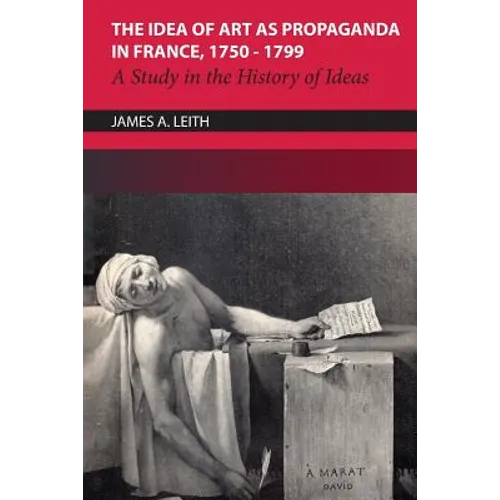
One of the most modern features of the French Revolution was its intention of shaping a new kind of citizen by exposing him from childhood to inspirational messages and behavioral models. In this effort to regenerate the masses the French Revolutionaries sought to employ not only schools, but newspapers, festivals, dramas, poems, songs, paintings, statues, and engravings as well. At the peak of the Terror, French leaders brough tthe West to the threshold of the totalitarian state in the fullest sense of the world: they established a single party state, directed a regimented economy, created a mass army, and sought to mobilize all the media capable of influencing the human mind.
In was an interest in both art and the Revolution which led Professor Leith to explore the groth of the idea of using art as one instrument of propaganda. The idea proved to have deep roots in western civilization, going back to classical thinkers, medieval churchmen, and the art officials of such monarchs as Louis XIV. But following the hedonistic rococo art of the first half of the eighteenth century, this idea of didactic art took on a new lease of life, reaching a crescendo during the Terror. This book analyses the contribution of the philosophes, the Encyclopedists, royal officials, art critics, and revolutionary leaders to the resurgence of the idea; it also probes the peculiar psychological assumptions which led eighteeneth-century thinkers to believe in the efficacy of visual propaganda.
The outcome of this idea of art as an ideological weapon was involved in the fate of the Revolution itself, yet it was also affected by certain curious tensions already evident in the minds of its advocates under the Old Régime. Lingering interest in purely aesthetic values, k affirmation of the need for creative freedom, and determination to maintain French cultural hegemony, all complicated the effort to turn art into a vehicle of civic instruction. The final chapter examines the rôle of these tensions in the dénouement of the idea in the closing phase of the Revolution.
This book should appeal not only to those interested in French civilization, the age of Enlightment, and they French Revolution, but to those concerned with the rôle of art and the artist in modern society as well.
Author Biography
JAMES A. LEITH is a graduate of the University of Toronto and of Duke University. He has taught at the University of Saskatchewan and at Queen's University, where he is at present an Associate Professor of French History.



