


Product Description
by George B. Bridgman (Author)
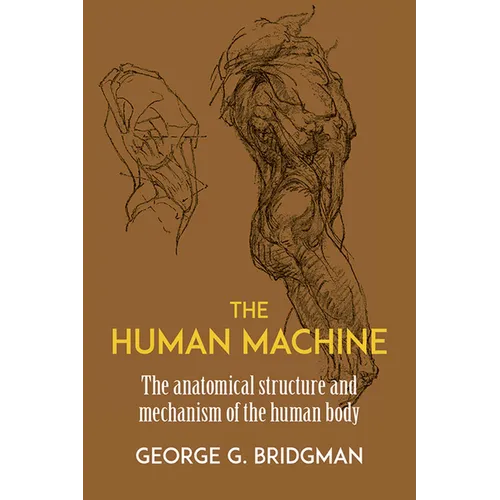
What is the difference between art anatomy and Bridgman's concept of the human machine? The human machine is the body as not only a fixed framework but also as a complex work of art which moves and was designed to move.
In over 400 drawings, George B. Bridgman demonstrates the machine through the presentations which made him a gifted lecturer and teacher in his nearly fifty years at the Art Students League in New York and which gave life to drawings by his many students during those years. All skeletal and muscular systems are fully identified, and all are shown in front, back, and side views.
The Human Machine begins with the framework of bones. In each section (head, neck, hand, arm, forearm, elbow, trunk, shoulder, back, scapular region, pelvis, hip, thigh, leg, knee, foot, and toe as well as the combinations of the major sections working together), George Bridgman starts with the skeletal components of the system; then he adds the muscles, shows the changes in the muscles as the body moves and, finally, shows the appearance of the bodily section in action. At the title implies, Bridgman, throughout, supplements his anatomical work with comparative drawings of simple machines. The anatomical approach to figure drawing is the foundation for the study of human form, and as in his other books on figure drawing, Bridgman's Life Drawing and The Book of a Hundred Hands, Bridgman's approach to the subject is important and unique. The Human Machine will give students and serious artists the conception of the human structure as the complex of beautiful machines it is, and will show how bone and muscle structures are solely responsible for our movements and for the shapes which we, at various times, display.
Back Jacket
What is the difference between art anatomy and Bridgman's concept of the human machine? The human machine is the body as not only a fixed framework but also as a complex work of art which moves and was designed to move.
In over 400 drawings, George B. Bridgman demonstrates the machine through the presentations which made him a gifted lecturer and teacher in his nearly fifty years at the Art Students League in New York and which gave life to drawings by his many students during those years. All skeletal and muscular systems are fully identified, and all are shown in front, back, and side views.
The Human Machine begins with the framework of bones. In each section (head, neck, hand, arm, forearm, elbow, trunk, shoulder, back, scapular region, pelvis, hip, thigh, leg, knee, foot, and toe as well as the combinations of the major sections working together), George Bridgman starts with the skeletal components of the system; then he adds the muscles, shows the changes in the muscles as the body moves and, finally, shows the appearance of the bodily section in action. At the title implies, Bridgman, throughout, supplements his anatomical work with comparative drawings of simple machines. The anatomical approach to figure drawing is the foundation for the study of human form, and as in his other books on figure drawing, Bridgman's Life Drawing and The Book of a Hundred Hands, Bridgman's approach to the subject is important and unique. The Human Machine will give students and serious artists the conception of the human structure as the complex of beautiful machines it is, and will show how bone and muscle structures are solely responsible for our movements and for the shapes which we, at various times, display.
Unabridged republication of the 1939 edition.
Author Biography
Canadian artist George Brandt Bridgman (1865-1943) studied at the École des Beaux Arts in Paris and taught at New York City's Art Students League. Generations of students have learned the principles of anatomy and figure drawing from his books, which rank among Dover's most popular art instruction texts.



