Skip to content
Save 5% on your next order with code PREMIUM5!
100,000+ Products for Home, Medical, Office & Classroom Needs
Search
Skip to product information
1 of 1

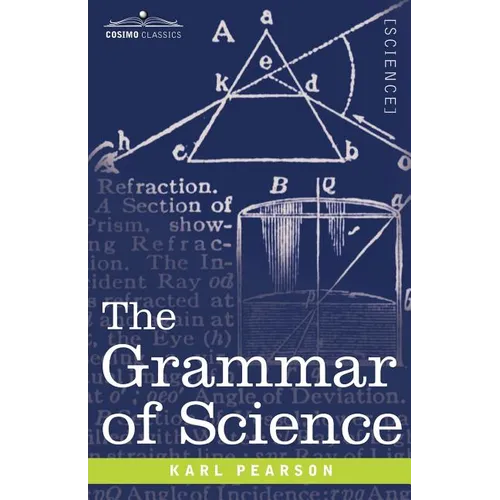
The Grammar of Science - Paperback

$35.98 USD
$35.98 USD
Sale Sold out
Shipping calculated at checkout.
In stock (100 units), ready to be shipped

Available Offers

Fast delivery available on most orders

Multiple secure payment options accepted

Secure checkout with
  • American Express
  • Apple Pay
  • Diners Club
  • Discover
  • Google Pay
  • Mastercard
  • PayPal
  • Shop Pay
  • Visa

Flight Range: Up to 1,000 meters (3,280 feet)

Maximum Speed: 45 kilometers per hour (28 miles per hour)

For all orders exceeding a value of 100USD shipping is offered for free.

Returns will be accepted for up to 10 days of Customer’s receipt or tracking number on unworn items. You, as a Customer, are obliged to inform us via email before you return the item.

Otherwise, standard shipping charges apply. Check out our delivery Terms & Conditions for more details.

View Product Details
Shopping cart
Product Product subtotal Quantity Price Product subtotal
The Grammar of Science - Paperback
$35.98/ea
$0.00
$35.98/ea $0.00

Product Description

by Karl Pearson (Author)

The Grammar of Science, originally published in 1892, was considered an essential read by budding young scientists like Albert Einstein. Pearson's work contributed to Einstein's greatest discoveries by introducing him to the ideas of relativity of motion, equivalence between matter and energy, and the concept of antimatter. Pearson opens his book with a definition and discussion of science itself, detailing what is required for inquiries to be scientific in nature. He then moves on to discuss space and time, motion, matter, and the future of scientific progress. Professionals and students alike will be fascinated by Pearson's insight into the nature of reality. British professor KARL PEARSON (1857-1936) worked at University College in London. He invented mathematical statistics and formed the Department of Applied Statistics at the University of London. He wrote many books and papers, including a biography of Francis Galton, a proponent of eugenics, and studies on evolution.

Number of Pages: 416
Dimensions: 0.93 x 8.5 x 5.5 IN
Publication Date: March 13, 2007
you might like